
Lucidea’s Lens: Knowledge Management Thought Leaders Part 27 — Jeanne Harris

Stan Garfield

Until her retirement in 2014, Jeanne led Accenture’s business intelligence, analytics, performance management, knowledge management, and data warehousing consulting practices.
Her research interests include data monetization strategies, cognitive computing, business implications of technological innovation, and the evolving role of data scientists and other analytical talent. Jean’s specialties include analytics, cloud computing, decision making, information technology, managing knowledge and attention, and talent management.
Jeanne has written over 100 articles on analytics, big data, cognitive computing, business intelligence, knowledge management, and IT strategy in major business and technology publications, such as Harvard Business Review, MIT Sloan Management Review, and the Financial Times.
She and I have both lectured at Columbia University. We both have undergraduate degrees from Washington University and overlapped there from 1972-1974.
Experience
- Columbia University, 2011–Present: Teaches a virtual, graduate-level course “Leading Business Analytics in the Enterprise”
- International Institute for Analytics 2017-2020
- Accenture, 1977-2014; last position: Global Managing Director, Information Technology Research at the Accenture Institute for High Performance in Chicago
Education
- University of Illinois Urbana-Champaign: MS, Information Science, 1974-1975
- Washington University in St. Louis: BA, Art History, English Literature, 1971-1974
Profiles
Books
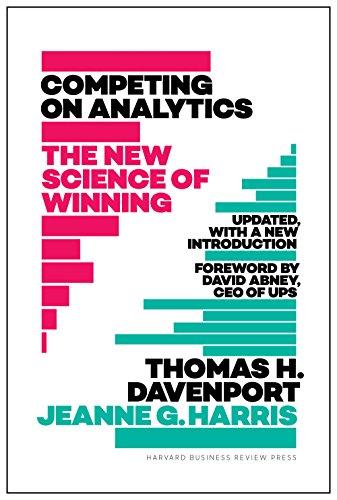
Competing on Analytics: The New Science of Winning with Tom Davenport
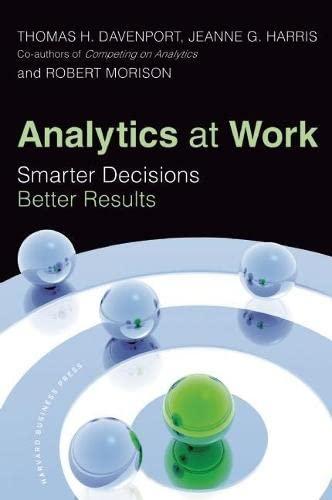
Analytics at Work: Smarter Decisions, Better Results with Tom Davenport and Robert Morrison
Videos
Other Content
Publications
- Innovation at Work: The Relative Advantage of Using Consumer IT in the Workplace
- Critical Evaluation: Put Your Analytics into Action
- Turning Cognitive Computing into Business Value Today
- Getting Value from Your Data Scientists
- Starting a Corporate Information Business? Consider These Six Tips
- It Takes Teams to Solve the Data Scientist Shortage
- Competing on Talent Analytics
- Getting Serious About Analytics: Better Insights, Better Decisions, Better Outcomes
Lifetime Achievement Award – The Women Leaders in Consulting, 2009 – Consulting Magazine
Quote: “Thought leadership plays an increasingly critical role in the ability of a consulting firm to differentiate itself in the marketplace.”
Interview with Ajay Ohri
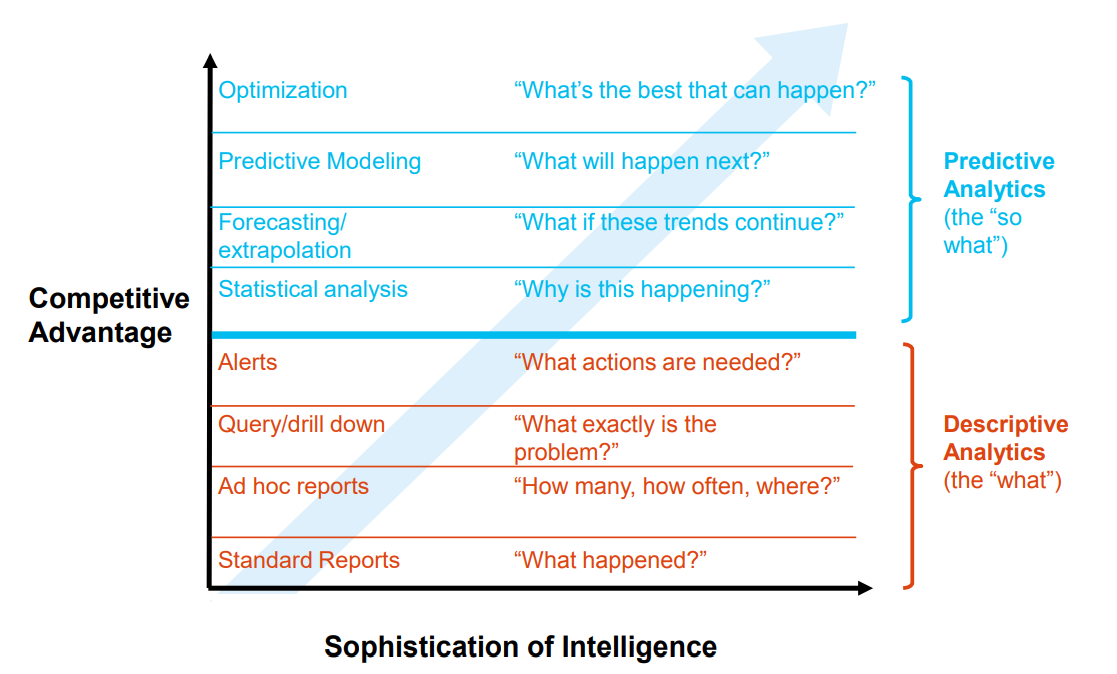
Analytics are an important tool for cutting costs and improving efficiency. Optimization techniques and predictive models can anticipate market shifts, enable companies to move quickly to slash costs and eliminate waste. But there are other reasons analytics are more important than ever:
- Manage risk. More precise metrics and risk management models will enable managers to make better decisions, reduce risk and monitor changing business conditions more effectively.
- Know what is really working. Rigorous testing and monitoring of metrics can establish whether your actions are really making desired changes in your business or not.
- Leverage existing investments (in IT and information) to get more insight, faster execution, and more business value in business processes.
- Invest to emerge stronger as business conditions improve. High performers take advantage of downturns to retool, gain insights into new market dynamics and invest so that they are prepared for the upturn. Analytics give executives insight into the dynamics of their business and how shifts influence business performance.
- Identify and seize new opportunities for competitive advantage and differentiation.
Analytics at Work: Secrets of Data-Charged Organizations
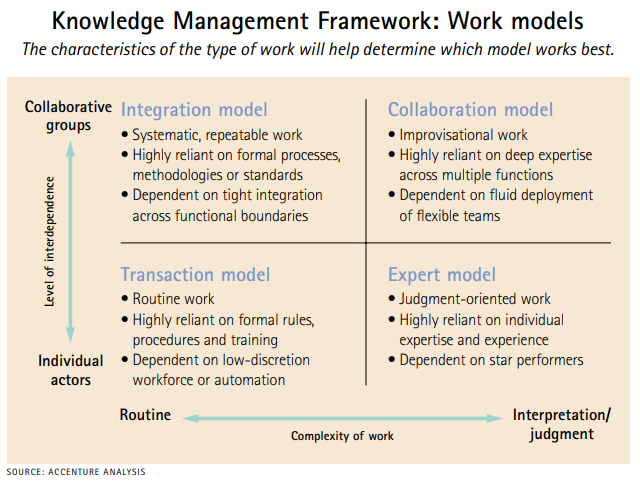
Knowledge management strategies that create value: A profile of major knowledge management strategies – with Leigh P. Donoghue and Bruce A. Weitzman
Stan Garfield
Please enjoy Stan’s blog posts offering advice and insights drawn from many years as a KM practitioner. You may also want to download a free copy of his book, Lucidea’s Lens: Special Librarians & Information Specialists; The Five Cs of KM from Lucidea Press, and its precursor, Proven Practices for Implementing a Knowledge Management Program. And learn about Lucidea’s Presto, SydneyEnterprise, and GeniePlus software with unrivaled KM capabilities that enable successful knowledge curation and sharing.
Never miss another post. Subscribe today!
Similar Posts

The KM Mentor, Part 9: Knowledge Management Certification
KM expert analysis and recommendations for knowledge management training and professional development that help build skills in a variety of specialties under the KM rubric.

The KM Mentor, Part 8: Top Knowledge Management Trends 2026
The intersection of AI and KM allows knowledge managers to inject the best KM into high-priority organizational AI initiatives; Stan Garfield’s review of 8 Top KM Trends 2026.

The KM Mentor, Part 7: What Can a Knowledge Manager Accomplish Without a Budget?
No budget for KM? Stan Garfield shows how 20 KM components and the Five Cs let you demonstrate value using only time and effort, and build the case for investment.

The KM Mentor, Part 6: The 10 Biggest Mistakes New Knowledge Managers Make
KM expert Stan Garfield offers his analysis of the 10 strategic mistakes it’s easy to make as a new knowledge manager, with practical options to proactively prevent them.
Leave a Comment
Comments are reviewed and must adhere to our comments policy.
0 Comments