
Lucidea’s Lens: Knowledge Management Thought Leaders Part 18 – Vanessa DiMauro

Stan Garfield

Vanessa DiMauro is CEO of Leader Networks, a research and consulting firm that helps companies use digital and social technologies to gain competitive advantage. She is a strategist, advisor, researcher, author, and speaker. Vanessa is a pioneer in the field of online communities and in using digital business solutions to gain customer insight and increase revenue. Before founding Leader Networks, she held leadership positions at Cambridge Technology Partners, Computerworld, and CXO Systems.
Vanessa was named one of Forbes’s Top 40 Social Media Masters Worldwide and one of CEOWorld’s Most Powerful Women in Social Media and identified as one of 20 Top Digital Influencers of 2018 by Whatagraph. She was also recognized as Research Fellow of the Year by the Society for New Communications Research.
Vanessa was on the faculty at Columbia University in the Information and Knowledge Strategy (IKNS) Master’s program. I met her when we were both presenting to the class. She specializes in strategy, communities, knowledge management, and marketing
Profiles
Books
- The Social Mind: A Research Study with Peter Auditore and Don Bulmer – PDF Copy
- The New Symbiosis of Professional Networks: Social Media’s Impact on Business and Decision-Making with Don Bulmer – Social Media Today Article – Survey Results (PDF) – Slides
Other Content
- Publications
- Blog
- Medium
- LinkedIn Articles
- LinkedIn Posts
- Google Scholar
- Semantic Scholar
- ResearchGate
- SlideShare
- SIKM Leaders Community presentation – Accelerating Knowledge at Scale: A mini case study
- The Socially Enabled Enterprise Study
- Socially Driven Collaboration Research Study
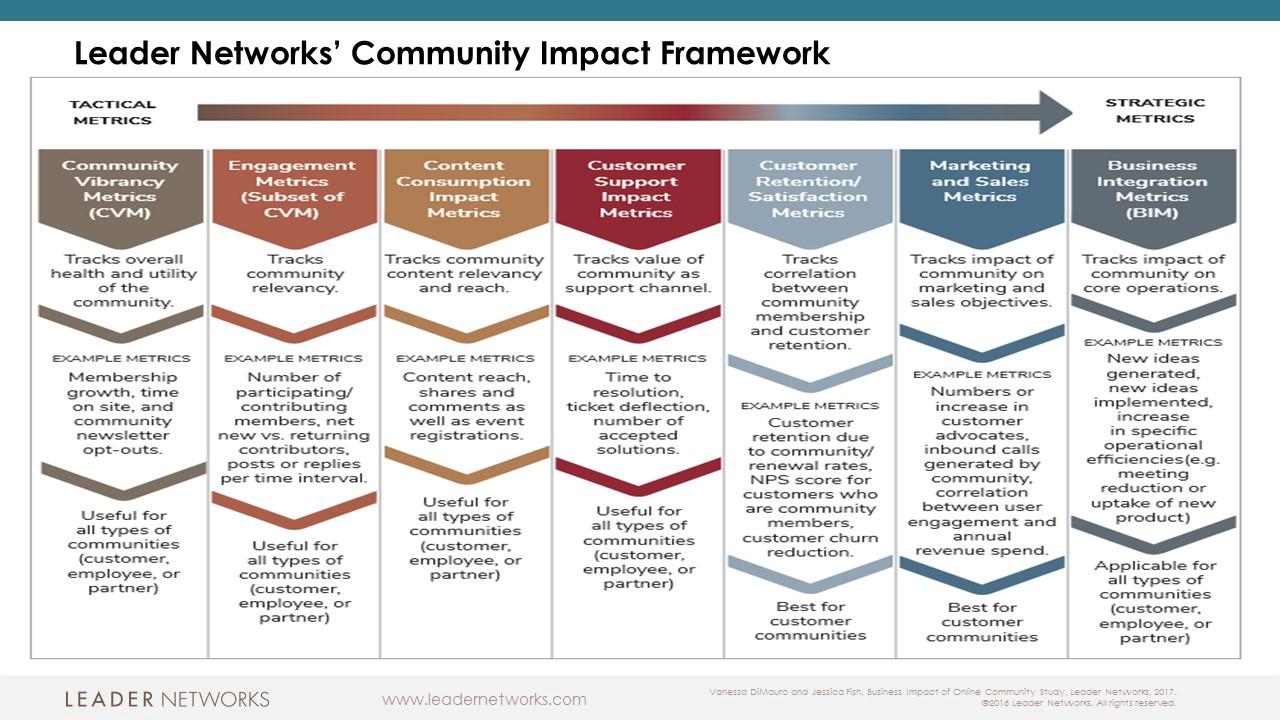
The Business Impact of Online Communities
Seven Failures of Companies that Unplug Their Online Communities
- Community goals are skewed to leadership—not member—needs.
- “Tool talk precedes strategy.
- Mausoleums are built instead of Sherpa tents. An online community requires continual enhancements driven by member feedback. Many make their online community planning into a long, drawn-out process. That’s a recipe for disaster. Communities are in constant flux from changing member needs, business objectives, technical improvements, and social norms. Community plans should focus on short sprints—not a big-bang approach.
- Failure to feed the content beast. Great content takes great effort, like getting a company’s thought leaders to put pen to digital paper, conducting studies, and inviting members to provide their expertise. Without it, members won’t come or stay for long.
- Poor community management skills. Community management is becoming a profession. Community managers need superior communications skills, the ability to cultivate strong relations, project management prowess, a research background, and social media proficiency.
- Chasing only business metrics and not member-driven ones. How has the community helped members better resolve their problems? Have community discussions bubbled up product or service defects? Measure what matters.
- No community zealot at the top. Online communities need a strong executive champion.
Stan Garfield
Please enjoy Stan’s blog posts offering advice and insights drawn from many years as a KM practitioner. You may also want to download a free copy of his book, Lucidea’s Lens: Special Librarians & Information Specialists; The Five Cs of KM from Lucidea Press, and its precursor, Proven Practices for Implementing a Knowledge Management Program. And learn about Lucidea’s Presto, SydneyEnterprise, and GeniePlus software with unrivaled KM capabilities that enable successful knowledge curation and sharing.
Never miss another post. Subscribe today!
Similar Posts

The KM Mentor, Part 9: Knowledge Management Certification
KM expert analysis and recommendations for knowledge management training and professional development that help build skills in a variety of specialties under the KM rubric.

The KM Mentor, Part 8: Top Knowledge Management Trends 2026
The intersection of AI and KM allows knowledge managers to inject the best KM into high-priority organizational AI initiatives; Stan Garfield’s review of 8 Top KM Trends 2026.

The KM Mentor, Part 7: What Can a Knowledge Manager Accomplish Without a Budget?
No budget for KM? Stan Garfield shows how 20 KM components and the Five Cs let you demonstrate value using only time and effort, and build the case for investment.

The KM Mentor, Part 6: The 10 Biggest Mistakes New Knowledge Managers Make
KM expert Stan Garfield offers his analysis of the 10 strategic mistakes it’s easy to make as a new knowledge manager, with practical options to proactively prevent them.
Leave a Comment
Comments are reviewed and must adhere to our comments policy.
0 Comments