
Lucidea’s Lens: Knowledge Management Thought Leaders Part 47 – Wendi Pohs

Stan Garfield

As cofounder of InfoClear Consulting, Wendi Pohs provided systems design, software tools, and technical consulting services to help large companies integrate semantic technologies with their new or legacy systems.
She focused on taxonomy integration, text analytics, intranet and website search relevance tuning, graph database design, and metadata management, providing strategic taxonomy consulting, taxonomy development and maintenance routines, and relevance enhancements for search.
Wendi and I were at DEC (Digital Equipment Corporation) at the same time, but we did not know one another then. While there, she developed a competitive intelligence retrieval system, successfully used for years by the sales force. Ron Smart was one of her informal mentors at DEC. A KM thought leader in the 1980s, Ron passed away on March 10, 2013.
Experience
- InfoClear Consulting – Chief Technology Officer, 2006 – 2022
- IBM – Consulting IT Specialist, 2003 – 2005
- Iris Associates/Lotus Development – Lead Taxonomist, 2000 – 2003
- American Mathematical Society, 1994 – 2000
- Digital Equipment Corporation, 1984 – 1994
Education
University of Michigan – School of Information
- BA
- MILS
Profiles
Books
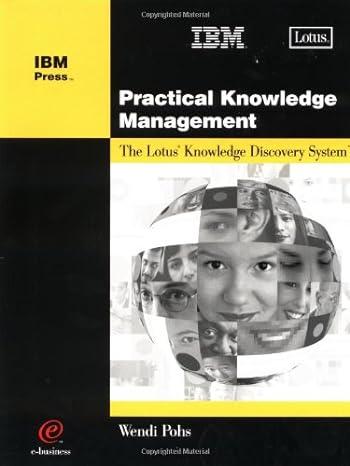
Practical Knowledge Management: The Lotus Discovery System with Gayle Thiel and Seth Earley
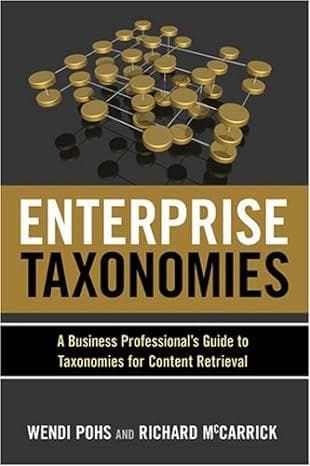
Enterprise Taxonomies: A Business Professional’s Guide to Taxonomies for Content Retrieval with Richard McCarrick
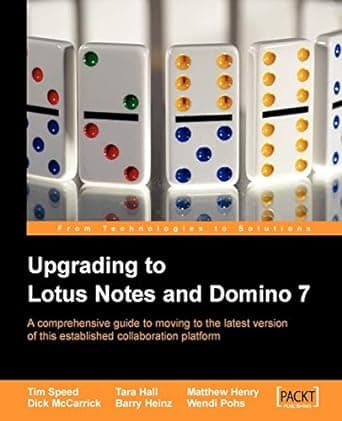
Upgrading to Lotus Notes and Domino 7 with by Tim Speed, Dick McCarrick, Barry Heinz, Tara Hall, and Matthew Henry
Content
Presentations
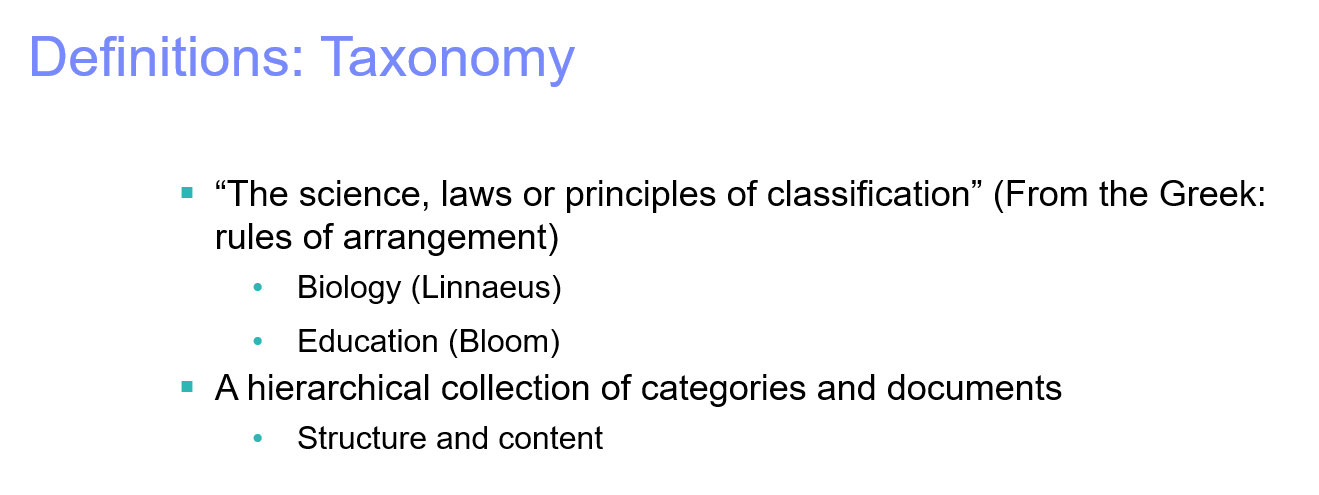
- Taxonomies, Lexicons and Organizing Knowledge
- Selecting a Taxonomy Management Tool
- Taxonomies of Knowledge: Building a Corporate Taxonomy
- The Gilbane Conference on Content Management Technologies
- Enterprise Search Summit
- 2009 Migrating to a New Search Engine: A Case Study with Marilyn Chartrand
- 2006
- Integrating Search and Taxonomy: A Deep Dive – Workshop with Lisa Kamm
- Boosting Findability with Lisa Kamm
- Taxonomy Boot Camp
- KMWorld
- Knowledge Nets 2001
- Landing the Raven—Positioning the Lotus KM Implementation in the Enterprise
- Taxonomies of Knowledge: Uncovering Hidden Themes in Existing Corporate Data
Articles
- Leverage taxonomies for enterprise search using IBM OmniFind, IBM Classification Module, and SchemaLogic with Jochen Dörre, Josemina Magdalen, and Bob St. Clair
- Creating a rules-based classifier for Discovery Server 2.0
- Taxonomy and Classification resources should sit on development teams
- Why I love Twitter
- Creating and Maintaining Machine-Generated Taxonomies in Human Organizations: Contributions from Research and Practice with Dick McCarrick and Michael Muller
- Issues in the design of software systems to support voluntary electronic communities with Michael Muller
- The Lotus Knowledge Discovery System: Tools and experiences
- Building a taxonomy for auto‐classification
- Importing a file system taxonomy into a K-map
- Selecting and configuring Discovery Server data repositories
Developing Taxonomies for Content Organization
Stan Garfield
Enjoy Stan’s blog posts offering advice and insights drawn from many years as a KM practitioner. You may also want to download a free copy of his book, Lucidea’s Lens: Special Librarians & Information Specialists; The Five Cs of KM from Lucidea Press, and its precursor, Proven Practices for Implementing a Knowledge Management Program. Learn about Lucidea’s Presto, SydneyEnterprise, and GeniePlus software with unrivaled KM capabilities that enable successful knowledge curation and sharing.
Never miss another post. Subscribe today!
Similar Posts

The KM Mentor, Part 9: Knowledge Management Certification
KM expert analysis and recommendations for knowledge management training and professional development that help build skills in a variety of specialties under the KM rubric.

The KM Mentor, Part 8: Top Knowledge Management Trends 2026
The intersection of AI and KM allows knowledge managers to inject the best KM into high-priority organizational AI initiatives; Stan Garfield’s review of 8 Top KM Trends 2026.

The KM Mentor, Part 7: What Can a Knowledge Manager Accomplish Without a Budget?
No budget for KM? Stan Garfield shows how 20 KM components and the Five Cs let you demonstrate value using only time and effort, and build the case for investment.

The KM Mentor, Part 6: The 10 Biggest Mistakes New Knowledge Managers Make
KM expert Stan Garfield offers his analysis of the 10 strategic mistakes it’s easy to make as a new knowledge manager, with practical options to proactively prevent them.
Leave a Comment
Comments are reviewed and must adhere to our comments policy.
0 Comments