
Lucidea’s Lens: Knowledge Management Thought Leaders Part 64 – Mark Britz

Stan Garfield

Mark Britz is a performance strategist. He helps people and organizations do better by first being better connected, building on their strengths, and identifying opportunities to improve workflow. He specializes in social learning, culture, organizational design, collaboration, social business, and Personal Knowledge Management (PKM).
Mark is Director of Event Programming at The Learning Guild and Workplace Performance Advisor at Social By Design Solutions, his own consultancy. Previously he worked for more than 15 years designing and managing learning solutions with organizations such as Smartforce, Pearson Digital Learning, the SUNY Research Foundation, Aspen Dental Management, and Systems Made Simple. Mark is a frequent writer, speaker, and commenter. He is based in Syracuse, New York.
Social by Design: How to create and scale a collaborative company with James Tyer
25 Ways to Support Social Learning in Your Organization
- Examine and challenge the existing organizational design.
- Promote conversation and dialogue.
- Prioritize people over technology.
- Create spaces for interaction.
- Empower employees to take ownership.
- Be tolerant.
- Understand the value of both fast and slow conversations.
- Establish engagement guidelines and parameters for different types of conversations.
- Make openness and transparency the default.
- Emphasize the value of negative conversations.
- Actively participate in and initiate conversations.
- Lead by example.
- Be purposeful.
- Invite critique.
- Prioritize psychological safety.
- Demonstrate leadership participation.
- Align conversations with business strategy.
- Share information on impact.
- Be a bridge.
- Embrace a learning culture.
- Foster a sense of shared purpose.
- Balance competition and collaboration.
- Leverage technology.
- Continuously evaluate and adapt.
- Have patience.
Social Learning at Work: Quick Start Guide
- Practice Transparency and Openness: Show Your Work/ Work Out Loud. Begin by ensuring that all important but not sensitive work is accessible and encourage observation and input by all levels of the organization.
- Reward & Recognize: Be visible in thanking, acknowledging and rewarding sharing and cooperative behaviors. Be diligent in encouraging open sharing of ideas, resources and collaboration. Recognize and praise group inputs and outcomes. Model exactly what you want to see. Encourage leaders to model exactly what you want to see.
- Encourage Curation over Creation: Share resources with the added “why” of its personal value to you – add context. Ensure access to outside information and to internal channels to share. Identify models of proper vetting and context-adding to aid in the movement of best of kind resources and information quickly through the organization.
- Formalize Social Technology: Use traditional communication channels (email, meetings) to move people to increased participation on social platforms. Create a simple structure for groups and keep them open vs. closed or private. Have employees complete profiles with an emphasis on skills and interests over titles. Nudge large group emails to be posted on social platforms. Ask sincere questions, to which the answers will help and inform your work.
The impact of organizational design on knowledge sharing
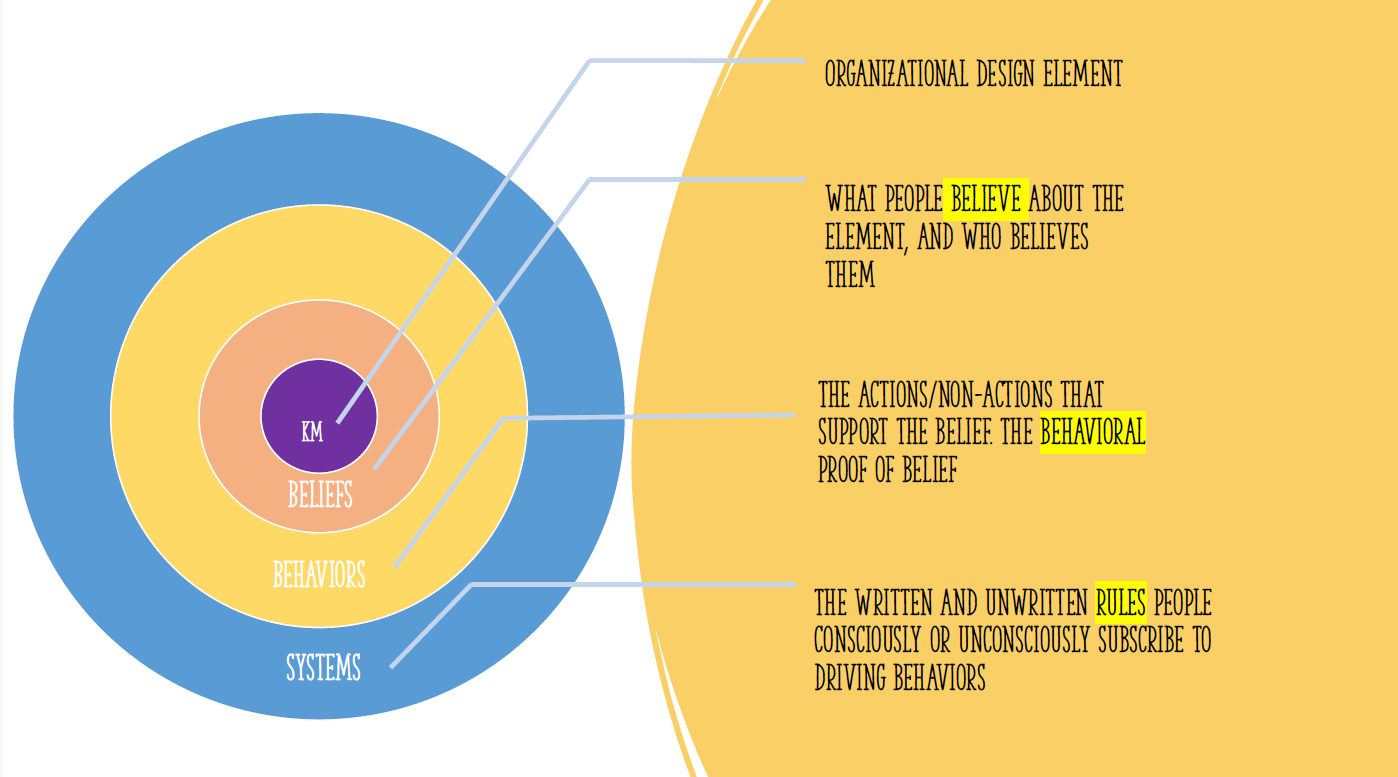
Map the Systems
Stan Garfield
Lucidea presents “Profiles in Knowledge Part One” the first of four free webinars based on Stan Garfield’s upcoming book, Profiles in Knowledge. He will detail five categories associated with the discipline of knowledge management, including AI and taxonomy, and spotlight KM practitioners with substantive impact in these areas. Join us TODAY, March 28 at 11 a.m. Pacific, 2 p.m. Eastern. Register now!
Never miss another post. Subscribe today!
Similar Posts

The KM Mentor, Part 10: The Most Meaningful Knowledge Management Metrics
KM expert Stan Garfield offers details of four sets of meaningful metrics for assessing the impact and successful execution of knowledge management programs.

The KM Mentor, Part 9: Knowledge Management Certification
KM expert analysis and recommendations for knowledge management training and professional development that help build skills in a variety of specialties under the KM rubric.

The KM Mentor, Part 8: Top Knowledge Management Trends 2026
The intersection of AI and KM allows knowledge managers to inject the best KM into high-priority organizational AI initiatives; Stan Garfield’s review of 8 Top KM Trends 2026.

The KM Mentor, Part 7: What Can a Knowledge Manager Accomplish Without a Budget?
No budget for KM? Stan Garfield shows how 20 KM components and the Five Cs let you demonstrate value using only time and effort, and build the case for investment.
Leave a Comment
Comments are reviewed and must adhere to our comments policy.
0 Comments