
KM Component 45 – Workflow Applications

Stan Garfield
Workflow applications consist of software that connects and sequences different applications, components, and people, all of which must be involved in the processing of data to complete an instance of a process. These applications support the workflow process.
Workflow automation is not strictly a knowledge management application, but it can be an important enabler by means of allowing knowledge capture and reuse to be embedded in routine business processes. By so doing, the likelihood of desired knowledge being collected and retrieved at the appropriate times is significantly increased, since there is no separate KM process which may or may not be followed.
For example, for call centers, there are four KCS (Knowledge-Centered Service) practices “that contribute to the creation and maintenance of knowledge in the Solve Loop: Capture in the workflow: while responding to the request, we capture the requestor’s context (their words and phrases) as well as the responder’s knowledge. As tacit knowledge becomes explicit in the context of use, it becomes part of the article. Capturing this tacit information makes the article findable and reusable.”
Look for opportunities to add knowledge capture and reuse to existing workflow applications and consider implementing new ones that do this. The result will be fewer extra steps, more automated knowledge flow, and improved business results.
Example using Microsoft SharePoint
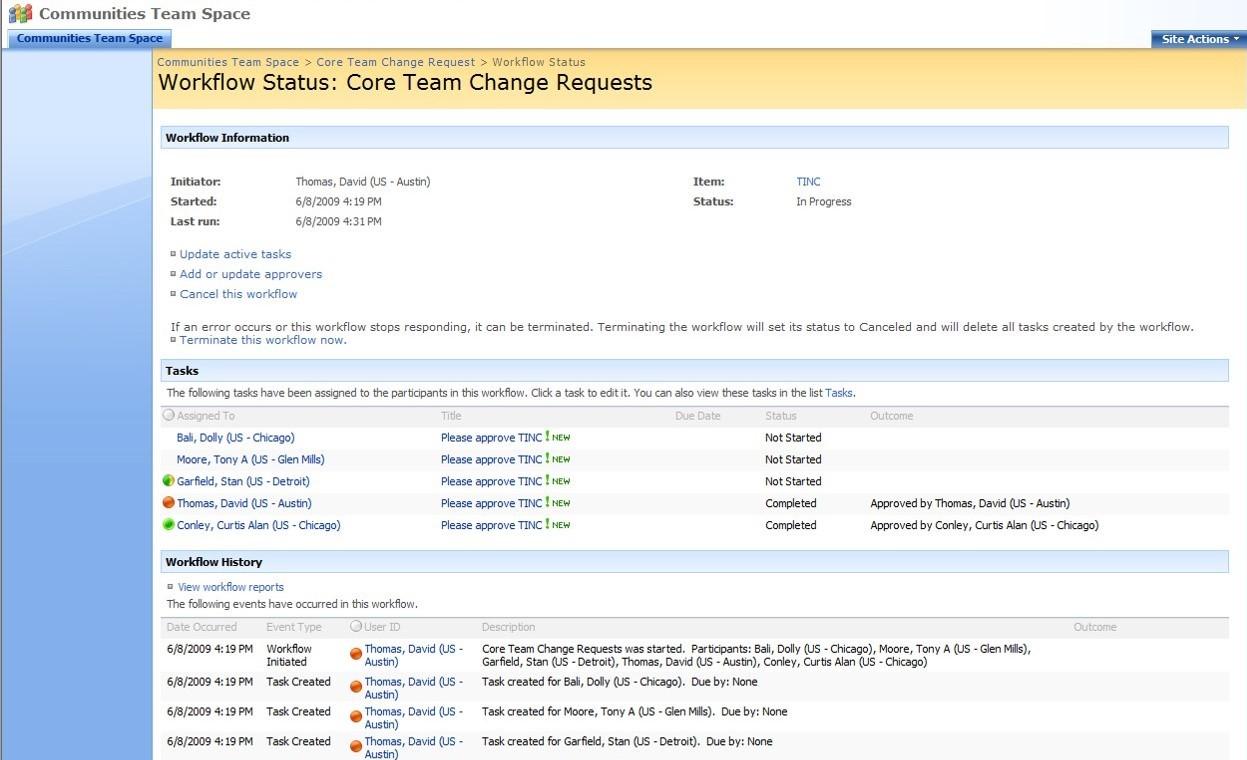
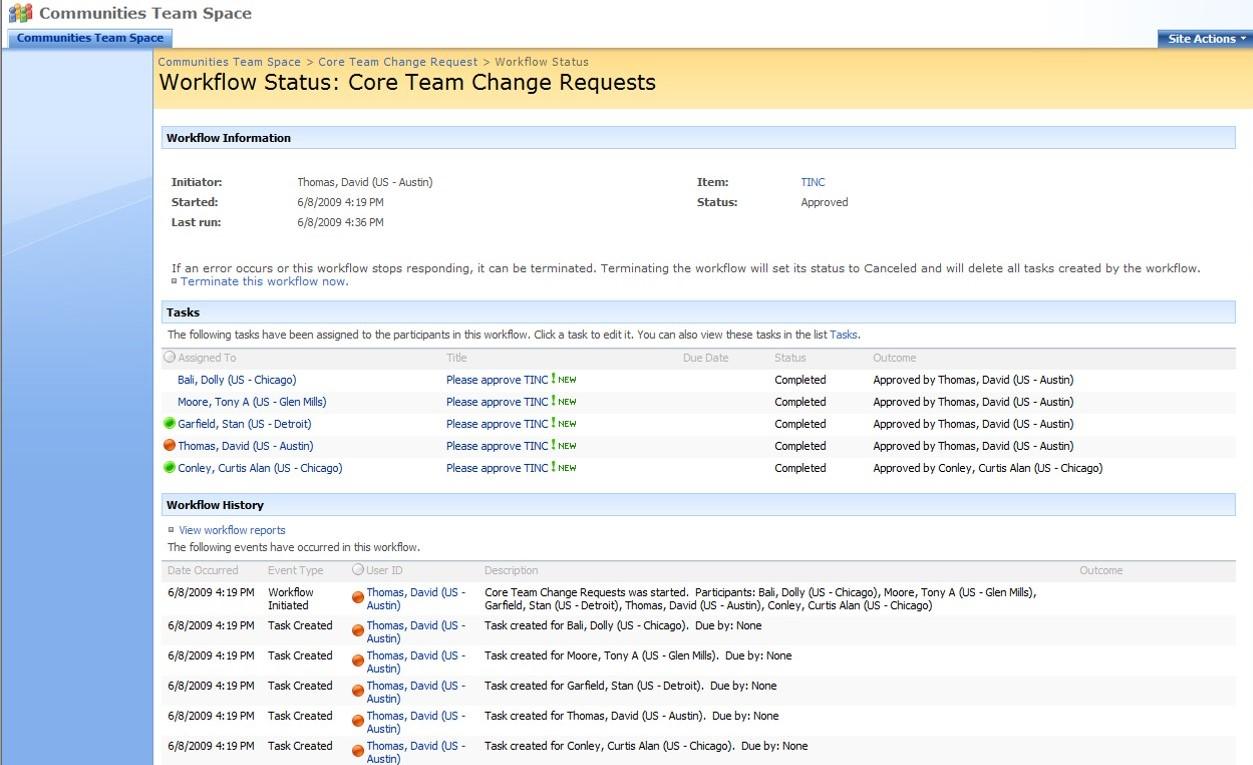
Here is an example of using the workflow functionality of Microsoft SharePoint was used for task management.
Step 1: If you are part of a workflow you will receive a task notification
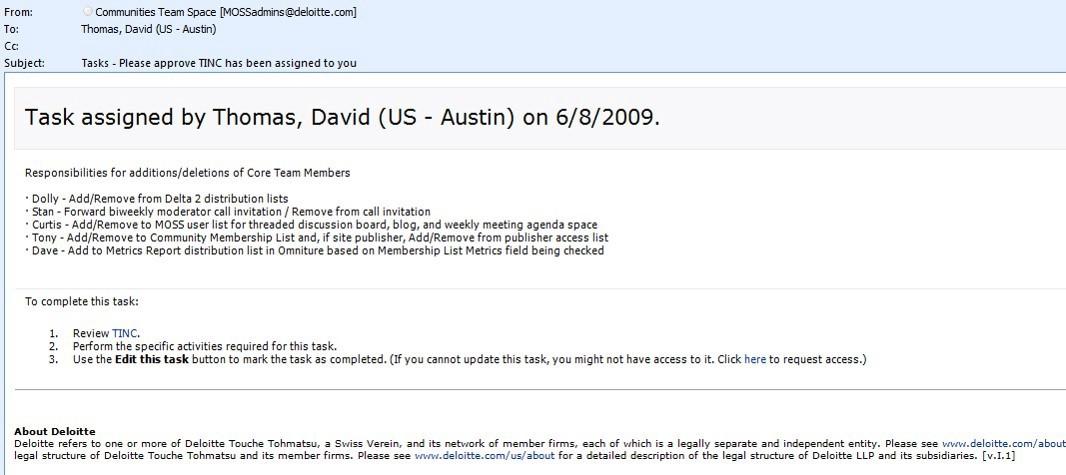
Step 2: Review Request
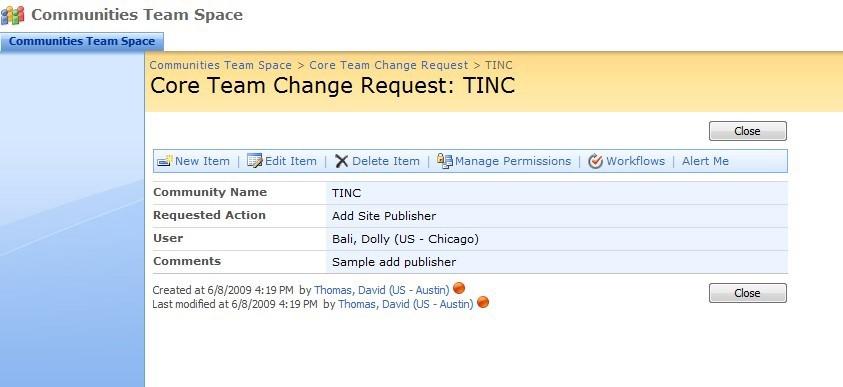
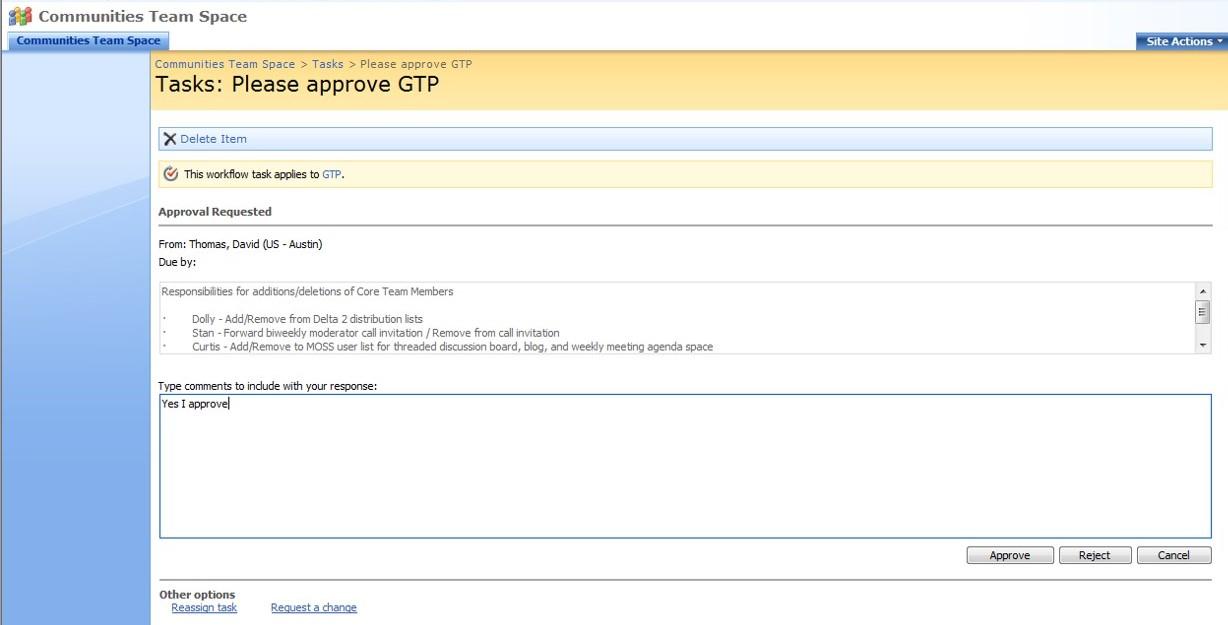
Step 3a: Approve Task related to the request (access from original email notification)
Step 3b: Approve Task
Step 4a: Each team member completes their step
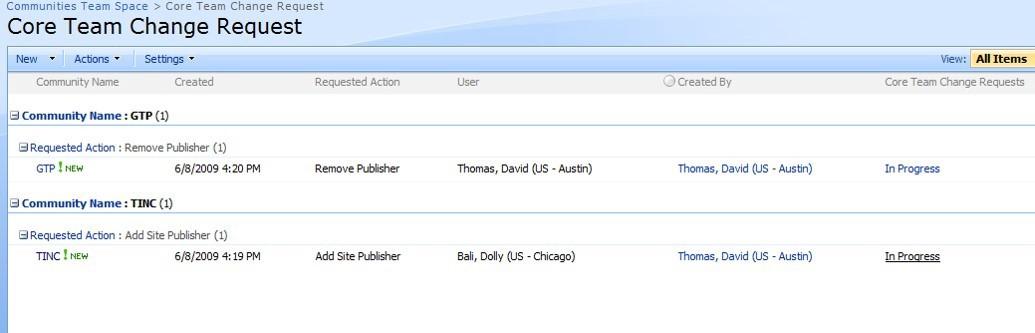
Step 4b: Each team member completes their step
Stan Garfield
Please enjoy Stan’s additional blog posts offering advice and insights drawn from many years as a KM practitioner. You may also want to download a copy of his book, Proven Practices for Implementing a Knowledge Management Program, from Lucidea Press. And learn about Lucidea’s Inmagic Presto and SydneyEnterprise with KM capabilities to support successful knowledge curation and sharing.
Similar Posts

The KM Mentor, Part 9: Knowledge Management Certification
KM expert analysis and recommendations for knowledge management training and professional development that help build skills in a variety of specialties under the KM rubric.

The KM Mentor, Part 8: Top Knowledge Management Trends 2026
The intersection of AI and KM allows knowledge managers to inject the best KM into high-priority organizational AI initiatives; Stan Garfield’s review of 8 Top KM Trends 2026.

The KM Mentor, Part 7: What Can a Knowledge Manager Accomplish Without a Budget?
No budget for KM? Stan Garfield shows how 20 KM components and the Five Cs let you demonstrate value using only time and effort, and build the case for investment.

The KM Mentor, Part 6: The 10 Biggest Mistakes New Knowledge Managers Make
KM expert Stan Garfield offers his analysis of the 10 strategic mistakes it’s easy to make as a new knowledge manager, with practical options to proactively prevent them.
Leave a Comment
Comments are reviewed and must adhere to our comments policy.
0 Comments