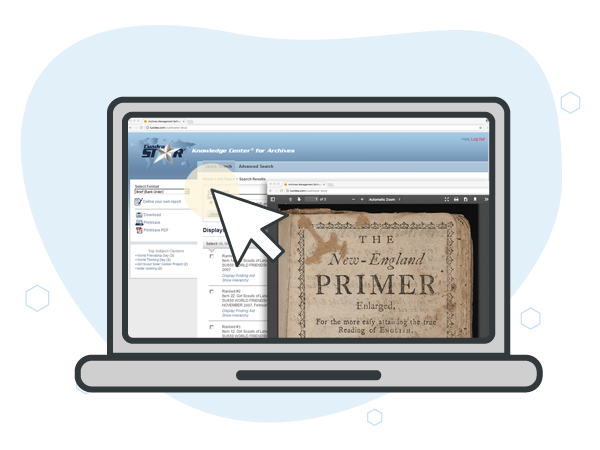
CuadraSTAR SKCA Success Story
Sequoyah National Research Center Expands Access to its Public Collections
 The collections of the University of Arkansas at Little Rock’s Sequoyah National Research Center constitute the largest assemblage of Native American expression in the world. Their collections include Native newspapers, periodicals, manuscripts, artwork, and other materials related to Native communities, press history, and literature.
“Since we have acquired CuadraStart software, access to our ‘hidden collections’ have improved dramatically. Our partnership with Cuadra Associates has brought great potential for our outreach capabilities and further enhanced our online presence. We look forward to working with them for many years to come and anticipate a future full of possibilities.”
ERIN FEHR
Research Center Archivist
Sequoyah National Research Center
Key Challenges

Provide access to the collections for their users worldwide
Decrease the community’s dependence on Center staff for simple searches of collections
Extend visibility of the Center’s “hidden collections,” which, in many respects, were ALL of the Center’s collections
Use a single software product to describe and maintain their archival, art, and bibliographic collections, supporting each collection according to the standards of its own discipline
Why Argus was selected
CuadraSTAR enables secure access to the collections with powerful, easy-to-use public access catalogs
Provides a feature-rich platform for describing each collection (archival; art; bibliographic) with capabilities that reduce duplication of effort
The Hosted Service provides a secure environment for the data and doesn’t require in-house IT resources to support this application
Excellent value for the service
Sequoyah National Research Center’s mission is to acquire and preserve all forms of expression of Native North Americans by collecting their written word and art and by creating a research atmosphere that invites indigenous peoples to make the Center an archival home for their creative work. Before acquiring CuadraSTAR SKCA, most research work required traveling to Little Rock, Arkansas, or depending on the Center’s staff to do the work. With CuadraSTAR SKCA, the Center now makes its collections accessible to researchers worldwide, opening up these vital materials to the entire community and extending its reach significantly.
Enabling Access and Creating a Research Atmosphere
The collections of the University of Arkansas at Little Rock’s Sequoyah National Research Center constitute the largest assemblage of Native American expression in the world. Their mission, to acquire and preserve the writings and ideas of Native North Americans, is accomplished through collecting the written word and art of Native Americans and creating a research atmosphere that invites indigenous peoples to make the Center an archival home for their creative work. Their collections include Native newspapers, periodicals, manuscripts, artwork, and other materials related to Native communities, press history, and literature. It also houses the J.W. Wiggins Native American Art Collection, a collection of more than 2600 pieces of art by contemporary Native American artists. The research center recently implemented CuadraSTAR Knowledge Center for Archives and CuadraSTAR Knowledge Center for Libraries to provide public access to its collections. Their searchable on-line catalogs are accessible over the Internet. Their archives catalog contains finding aids to their manuscripts and special collections as well as the records for their art collections. The library catalog contains everything else: books, periodicals, and the indexing of Indian Removal records.
Operational Benefits
- Provides a secure, supported platform for describing their collections
- Reduces duplication of effort in the daily tasks of maintaining the data
- Improves efficiency in distributing information about their resources
Organizational Benefits
- Extends access to the collections to researchers worldwide
- Enhances the Center’s online presence
- Increases the Center’s potential for outreach beyond scholars and others already familiar with the Center and its collections
Financial and Strategic Benefits
- A secure, supported IT platform allows in-house expertise to be developed in directions other than IT maintenance
- Hosted service makes future budget outlays clear and controllable

"Before implementing CuadraStar, our users either had to visit us in person, or contact us by phone or email to learn about the variety of materials that are available to them in this collection. With CuadraStar, we can provide access to the databases and full text collections that are a vital part of the Center’s e ort to document all aspects of life among American Indians, Alaska Natives, and Nations of Canada."
DR. DANIEL F. LITTLEFIELD
Research Center Director
Sequoyah National Research Center
More CuadraSTAR SKCA Success Stories
CuadraSTAR SKCA Success Stories








Request a CuadraSTAR SKCA Demo