


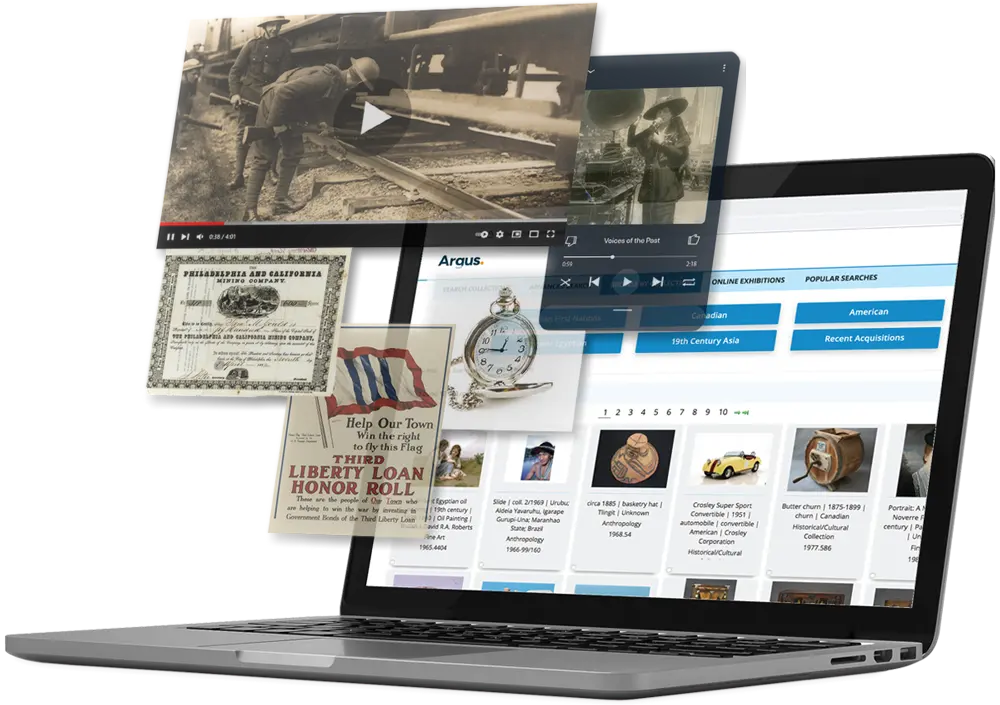
The power of shared collection discovery doesn’t only reside in search results. Many discovery portals offer multiple ways to access collections and give digital users agency over how they experience and explore materials.
Throughout this series on collaborative museum discovery portals, we have tracked the evolution of museum data from isolated silos to an interconnected consortium portal. We’ve discussed the necessity of blending best practices, sharing standardized vocabularies, the technical power of data aggregates, and the intellectual excitement of finding affinities across institutions. This post will evaluate how discovery portals can help to unearth those shared affinities through specific tools, pathways, and functionality.
Moving Beyond the Search Bar
For a long time, the gold standard of online collections was a prominent search bar. We assumed that if we provided a box, users would know what to type into it. But for the casual user, the student beginning a project, or the person who “doesn’t know what they don’t know,” an empty search bar can be intimidating.
By leveraging the blended best practices we’ve established, museums can build pathways that allow for serendipitous discovery. When our data is standardized and aggregated, we can offer entry points that aren’t dependent on a specific keyword.
As a refresher, the common ways to present affinity-based discovery experiences through a collaborative museum portal include:
- Galleries
- Browse by topic
- Online exhibits
- Curriculum support
It’s one thing to know these features exist, and another to see them in action. Checking out other discovery portals is a great way to gather ideas.
Examples of Consortium Discovery Portals: Affinities in Action
This section outlines the ways in which regional and national consortia are delivering their affinity-based discovery experiences. These three examples demonstrate how consortium discovery portals offer points of engagement with cross-collection themes.
Digital Public Library of America (DPLA) is a national consortium for the United States. As of this writing, DPLA offers discovery across more than 50-million digital materials from 44 regional partners (like Northwest Digital Heritage) and individual institutions.
DPLA uses the following tools to highlight cross-collection commonalities and connections:
- Browse by Topic
- Create Lists
- Online Exhibitions
- Primary Source Sets
- User Guides
Calisphere is a University of California Libraries initiative that facilitates access to more than two million digital items represented in approximately 2,000 collections from more than 300 California cultural heritage organizations.
Calisphere uses the following tools to highlight cross-collection commonalities and connections:
- Exhibitions
- Grouped Exhibitions by topic
Northwest Digital Heritage (NWDH) is a partnership between the State Library of Oregon, Oregon Heritage, and Washington State Library, sponsored in part by the Institute of Museum and Library Services (IMLS). NWDH includes more than one million digital materials from nearly 36 digital repositories and across 300 collections.
NWDH uses the following tools to highlight cross-collection commonalities and connections:
- Featured Topics
- Connected to DPLA for further collection connections
The Final Frontier of Shared Discovery
Breaking down our digital walls and committing to shared standards provides a view of human culture that is more than the sum of its parts. We have moved from being keepers of objects to being architects of connections.
The final frontier of shared discovery isn’t just about making the data work better—it’s about meeting our digital users in the diverse and often unpredictable ways they actually seek information. These alternate discovery points ensure that our collections are not just available but truly accessible to everyone, regardless of how they choose to begin their exploration.



0 Comments