

Sharing with Collections Management Systems (CMS) requires a creative partnership approach. But what type of partnership makes the most sense for your museum?
In our previous posts, we explored the Unified Hub and the Peer-to-Peer (P2P) Bridge partnerships. Both models represent deep technical commitments, either through sharing a single database or granting permissions that allow access across separate systems.
But what if neither scenario is right for your museum? For example, you may have a CMS that works perfectly well for your internal needs, but you’d like to share your collections with a larger consortium. This is where Approach #3, the Discovery Portal, comes in. It’s the lightest model of partnership, with a focus on visibility and access without requiring changes to your internal technical infrastructure. While your museum will still need to maintain its own CMS, you’ll benefit from a typically more bespoke, publicly available online search engine.
What Is a Discovery Portal?
With a discovery portal, partnering institutions keep their existing, separate Collections Management Systems exactly as they are. Whether you use a robust, vendor-supported CMS, a custom-built solution, or a well-maintained set of spreadsheets, your internal technical infrastructure and processes remain untouched. Instead of merging systems or granting direct access to your system, your collection metadata will be periodically aggregated into the discovery portal.
How Does a Discovery Portal Stay Current?
Depending on the setup, data harvesting can be triggered manually by the consortium or occur automatically. The majority of consortium portals available today use the Open Archives Initiative Protocol for Metadata Harvesting (OAI-PMH).
However, many consortia can also support gathering and importing data via Comma-Separated Values (CSV) files—usually in circumstances where a partner collection isn’t housed in a traditional CMS or isn’t available online for OAI-PMH.
The Model in Action: Calisphere
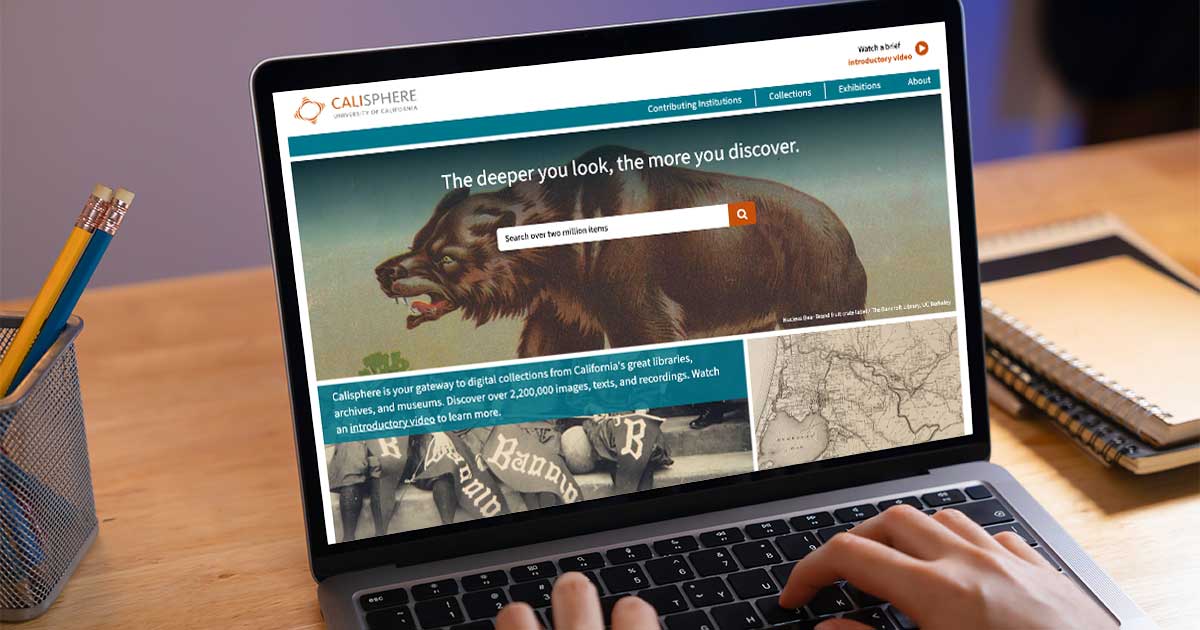
A great example of the discovery portal approach is the Calisphere regional initiative in California. More than 100 cultural heritage institutions from around the state are represented in this regional aggregator, but to the public user, Calisphere presents the collection material as if it were one seamless collection.
A user can search for “lighthouses” and see results from all relevant institutions regardless of what type of CMS they have in place. In Calisphere specifically, the search reveals 1,098 items found across 130 collections.
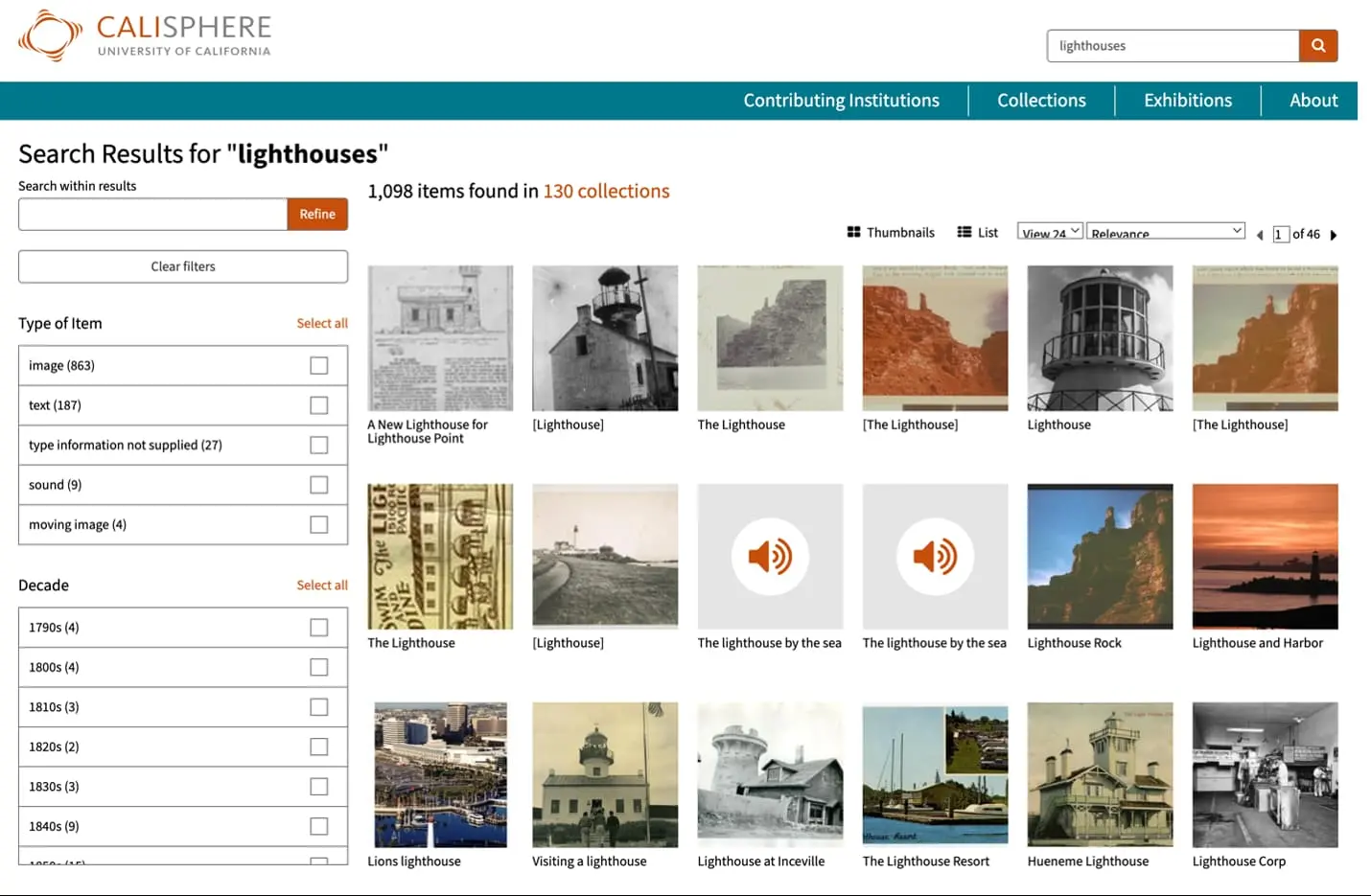
Discovery portals are typically themed, because consortia are centered around a commonality across collections. Calisphere is centered on regionality: California art, history, and heritage. Some other consortia, like the Biodiversity Heritage Library (BHL), focus instead on a specific subject. In BHL’s case, the centering theme is biodiversity literature.
The Partnership Edge: Why the Discovery Portal?
For many museum professionals, the discovery portal approach offers the lowest barrier to entry for collaboration:
- Minimum Work to Contribute: While some data massaging may be needed to ensure it works well within the portal, no major process or technical changes are needed unlike the Unified Hub approach.
- Zero System Disruption: You don’t have to migrate data or learn new software. Your staff can continue their work in the CMS environment they already know.
- Ultimate System Flexibility: This model is system-agnostic. From spreadsheets (allowed with some consortia) to homegrown databases, open-source tools, and vendor-supported Collections Management Systems; everyone’s data can coexist in the portal.
- Amplified Collections Discovery: Because the portal’s primary focus is to amplify discovery, portals often feature enviable user interfaces (UI) and browsing support tools.
- Low Cost and Risk: Joining a consortium for participation in a discovery portal is typically a very affordable option. As for risk, if the partnership dissolves, your internal data remains completely unaffected and won’t be orphaned by the removal of the portal.
The Partnership Challenge: Discovery Portal Trade-Offs
There are some trade-offs to this approach. For many share discovery portals, there are two common challenges to be aware of: data lag and dirty data.
Data Lag
Depending on the construction of the portal and the data harvesting process, there can be a lag in updating data. If you edit a record today, it might not show up on the discovery portal until the next scheduled update.
Dirty Data
To make data across dozens of different Collections Management Systems work together, there must be a consistently overlapping area of data to ensure it is cross-searchable. And the shared data needs to adhere to a certain level of “cleanness”—meaning the data is in the correct fields and consistently entered. To aid in this goal, the consortium will typically dictate what fields are used and how. Because of this requirement, some individual data practices may need to be amended in order for the data to play nicely together.
If the consortium is well staffed or if the portal is well constructed, the degree to which these challenges impact your museum will likely decrease.
Our Collections Are Stronger Together
For those new to creatively sharing via CMS, the discovery portal offers an encouraging starting point. It builds trust and visibility among cultural heritage institutions without the high stakes of shared technical infrastructure. It proves that even if we use different systems internally, we can still offer deep and meaningful points of discovery into our collections data.
Whether you choose a Unified Hub, a P2P Bridge, or a Discovery Portal approach, there are two main takeaways from this series: first, creative partnerships offer an opportunity for museums to save money with a shared CMS approach; and second, our collections are more powerful when they’re together.





0 Comments