

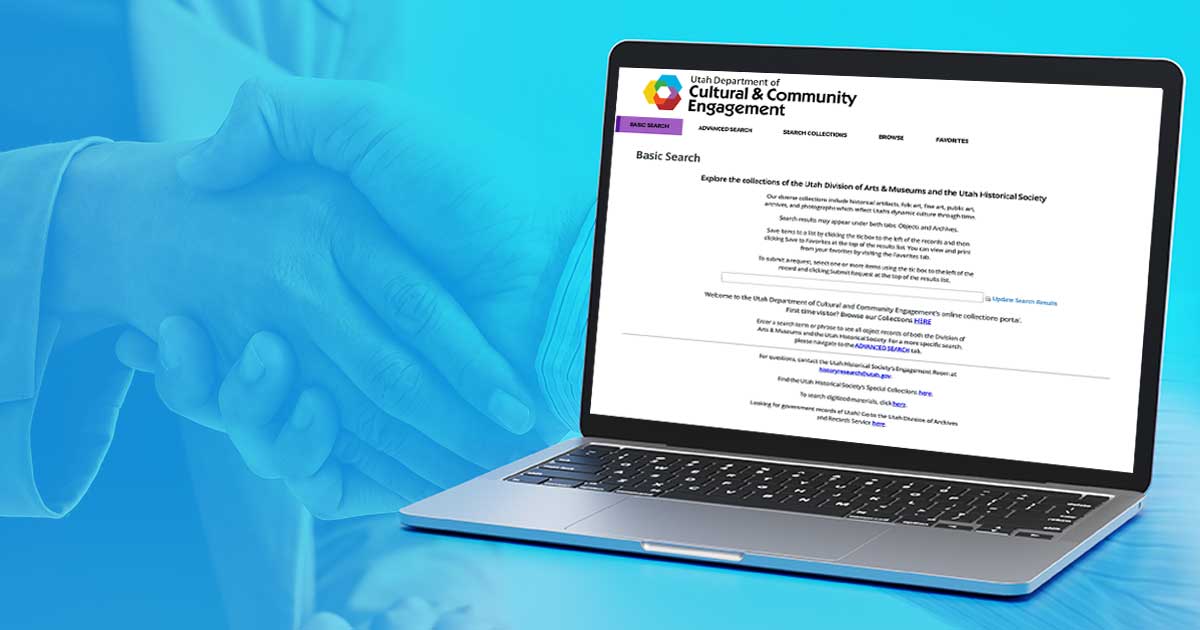
Under the umbrella of the Utah Department of Cultural & Community Engagement, the Utah Division of Arts & Museums (UA&M) and the Utah Historical Society (UHS) have united to modernize their digital stewardship.
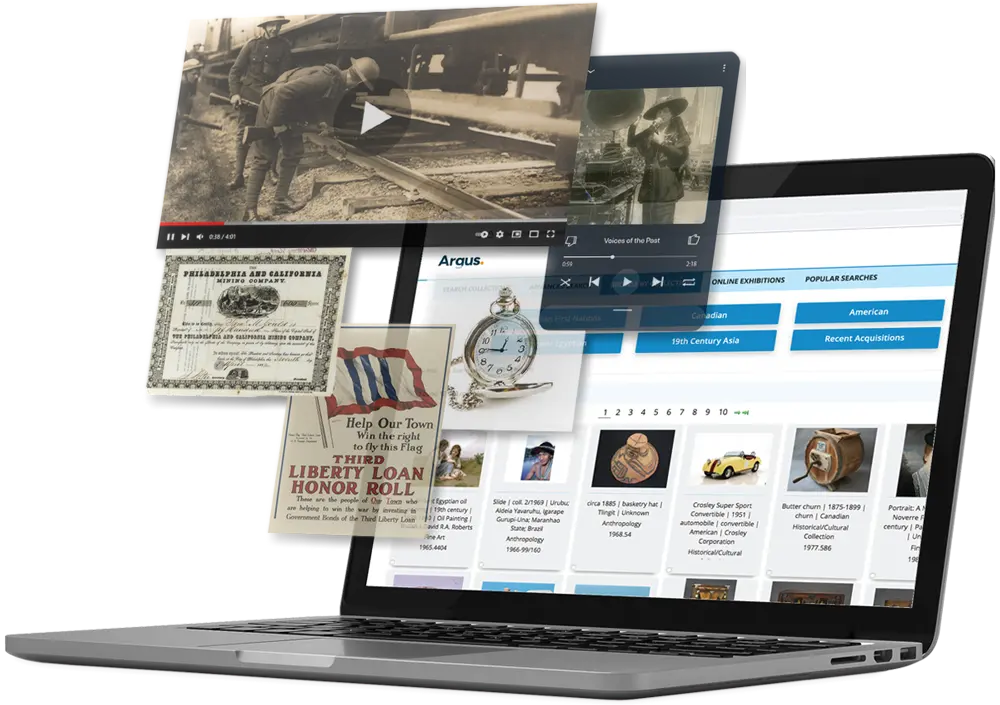
Together, they embarked on a procurement process for a shared collections management system (CMS) that could meet the needs of both institutions and be expanded to include future partners. To achieve this, they selected Lucidea’s Argus and ArchivEra platforms to manage their diverse art, artifact, and archival collections.
You can explore the collections of the Utah Division of Arts & Museums and the Utah Historical Society via their public portal.
What It Means to Share a Single CMS Database
Sharing a single database is the most integrated approach to a shared CMS. In this setup, multiple institutions operate within a single, centralized database. The technical aspects of how a CMS is shared will depend on the functionality available in the product.
In the case of Argus and ArchivEra, it is possible to put partitioned access in place by assigning collections, setting up individual but cooperative catalog forms, and supporting shared vocabularies for improved collection discovery.
To read more about sharing a single database and for an overview of the benefits and challenges, please check out our previous post on Lucidea’s Think Clearly Blog: Power in Partnerships: The Unified Hub.
The Partnership Edge: Why Share a CMS?
Sharing a single CMS instance can offer a multitude of benefits, including bigger buying power for a better CMS product, inspired and technologically supported cross-institutional work, and amplified collection discovery.
The most impactful benefits of a shared CMS include:
- Massive IT Cost Savings: By consolidating server hardware and administrative roles into one CMS, institutions can afford more—for example, a more robust system. Or they can choose to redirect their savings toward other areas.
- An Increase in Technical Capacity: This model can significantly increase the technical capacity of each partner museum. Instead of supporting multiple separate systems, there is now one unified platform that benefits from the collective oversight of both teams.
- Improved Communication and Shared Expertise: Operating within a shared database environment necessitates consistent, high-quality communication among teams. It also naturally increases the level of access to cross-team expertise that can be leveraged to improve system use and strengthen collection stewardship.
- Standardized Data Quality: Operating in a shared environment naturally encourages, and often requires, a unified cataloging protocol. This ensures that data is consistent across the entire database and leads to more exciting possibilities for collection discovery.
For the modern museum, the benefits of a shared CMS are transformative.
Why Utah Chose a Shared CMS Approach
For UA&M and UHS, bigger buying power, sharing resources, and pooling expertise were all on the list of benefits. But the most important factor in their joint approach was the ability to present their collections as a unified collection—in a system that could support searching across collection lines to yield powerful, centralized results.
The Partnership Requirement: Trust and Protocols
While the technical benefits are clear, a shared CMS is as much a social endeavor as a digital one. Due to the nature of sharing a digital ecosystem, a mistake in a standardized area of data entry at one institution can impact the searchability of the entire collection. Shared access to data requires a high level of trust among members and a foundation of shared cataloging standards. Establishing a governance structure to develop shared cataloging protocols is a prerequisite for beginning a successful partnership.
In this series, we’ll review how Argus functionality supports a multi-museum partnership as well as the shared governance decisions UA&M and UHS made to support their shared ecosystem. Our three areas of focus for the series are:
- Record forms
- Vocabulary and aggregates
- Separate but shared data
A Shared Vision for Utah’s Heritage
The partnership between sister divisions represents more than just a shared line item on a budget; it’s a commitment to unified digital heritage. Technical integration is the engine, but a shared vision is the fuel. By breaking down the silos between art and history, Utah is making its cultural wealth more accessible to the public than ever before.
Over the next three posts, we will dive into the “under-the-hood” configurations—from record forms to shared vocabularies—that make this collaborative ecosystem a reality.





0 Comments