


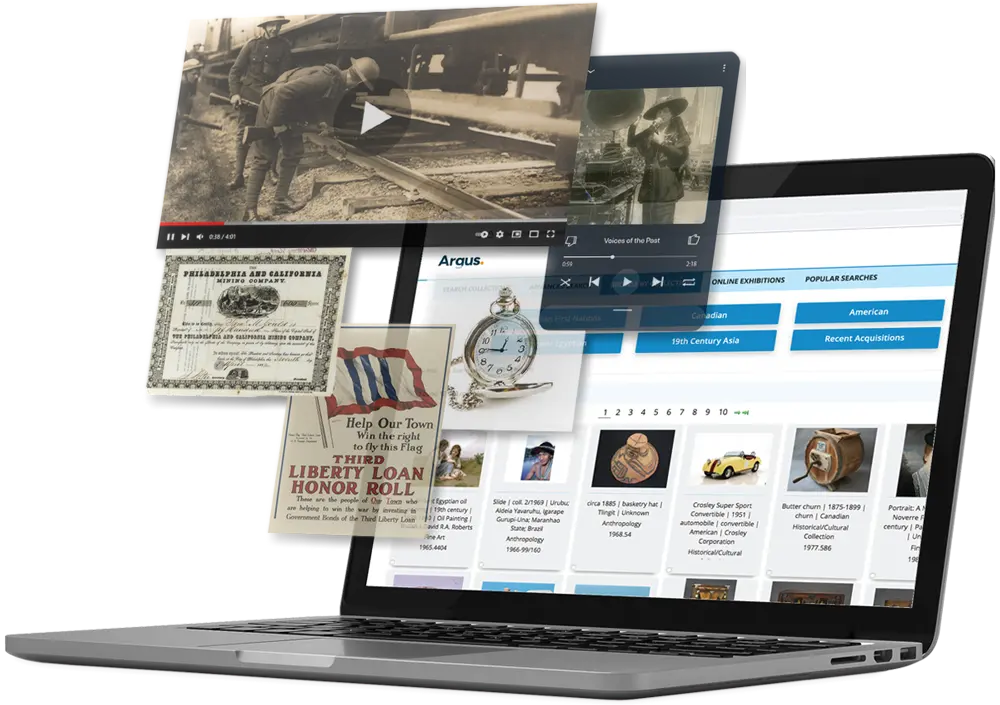
A Shared Museum CMS Case Study: Under the umbrella of the Utah Department of Cultural & Community Engagement (UTCCE), the Utah Division of Arts & Museums (UA&M) and the Utah Historical Society (UHS) have united to modernize their digital stewardship. Together, they embarked on a procurement process for a shared Collections Management System (CMS) that could meet the needs of both institutions and be expanded to include future partners. To achieve this, they selected Lucidea’s Argus and ArchivEra platforms to manage their diverse art, artifact, and archival collections.
You can explore the collections of the Utah Division of Arts & Museums and the Utah Historical Society via their public portal.
From a data security perspective the concept of co-mingling museum collection data can be intimidating. Even partners that are under a shared agency umbrella—like UA&M and UHS—have a variety of reasons collection data should remain separate. For example: to retain individual collection identity, protect sensitive or private information, and maintain data standards and practices for their own data.
Moving on from a collection discovery focus of shared but separate record forms and the careful deployment of shared vocabularies and aggregates, we turn to the last technical consideration of a shared CMS: security. This post will outline how UA&M and UHS leveraged the concept of Collections and Security Code assignment along with User and User Group permissions to partition and protect their data.
To read more about sharing a single database and an overview of the benefits and challenges, please check out our previous post on Lucidea’s Think Clearly Blog: Power in Partnerships: The Unified Hub.
The Logic of Access: Partitioning Data for Institutional Autonomy
UA&M and UHS have partitioned their data with the assignment of Collections and Security Codes. Security Code indicates museum ownership of the data. Collection captures if it’s a sub-collection within that museum that requires slightly different record form setup and/or user access. Then, based on Collection and Security Code identification, UA&M and UHS have assigned the appropriate view/add/modify/delete permissions to User Groups in Argus. Each UA&M and UHS staff member is identified as a User and each User is assigned to one or more User Groups in order to execute their respective portion of collections management.
Navigating the Shared Data Landscape
The challenge of sharing a database lies in the nature of a shared database. Partners need to be extra cautious when making database configuration decisions in areas where there are shared record forms or functionality. Additionally, the Administrators User Group has access to all areas—including each other’s data. While all areas of data are clearly labeled with the owner institution, it’s still possible to make mistakes. The UA&M and UHS partnership is aided by being underneath the same State of Utah umbrella, but they’ve also cultivated the necessary trust among staff to collaborate with this vulnerability in mind. It should be noted that the nature of any partnership requires a level of vulnerability.
A Blueprint for Shared System Success
Risk mitigation requires preparation. Here’s how to set up for success with the above vulnerabilities in mind:
- Setup a clear process for staff regarding how to navigate and make functional and technical decisions within a shared CMS.
- If a record form is shared then changes to fields (their addition, removal, or reformatting) must be agreed to by all partners.
- Require the use of Security Codes and/or Collections to support appropriate collection identification and user access.
- Clearly label forms with the institution name at the top so users can confidently confirm they’re in an appropriate record. (This is important for administrators who have access to all record areas).
- Establish regular meeting cadences among all partners in order to discuss joint decisions, leverage the collective’s expertise, support a positive shared user experience, and maintain trust.
Ultimately, these technical safeguards are only as strong as the communication behind them. By establishing clear protocols and a regular meeting cadence, partners can transform potential system vulnerabilities into opportunities for collective problem-solving and shared expertise.
Security as a Catalyst for Partnership Success
While collection security is an important factor to consider in partnership models, it’s important to balance the benefits that come with shared security. In a shared CMS environment and specifically where security is managed, there are the following benefits:
- Shared administrative load of account creation and maintenance.
- Deeply customizable user and group access.
- Ability to assign access at both an institution and collection level.
- Option to share access across collections for shared projects or exhibits.
These security features do more than just protect data; they provide a flexible framework that reduces the administrative burden on individual staff. By successfully balancing granular control with shared access, UA&M and UHS have created a system that is both secure and harmonious. This technical harmony ensures that while each institution remains the custodian of its own data, they are never working in isolation—setting a new standard for modern, multi-agency stewardship.
A New Standard for Collaborative Stewardship
The partnership between UA&M and UHS proves that the challenges of sharing a digital ecosystem are far outweighed by the rewards. By navigating the complexities of partitioned data, shared vocabularies, and collaborative governance, these institutions have done more than just upgrade their software—they have created a unified gateway to Utah’s heritage.
This shared CMS model serves as a powerful blueprint for other state agencies and museum consortia. It demonstrates that with a foundation of trust and the right technical framework, museums can maintain their unique institutional identities while achieving a level of collective discovery that was previously impossible. As this shared CMS continues to grow, it ensures that the stories told by Utah’s diverse collections remain interconnected, protected, and accessible for generations to come.



0 Comments