
Lucidea’s Lens: Knowledge Management Thought Leaders Part 96 – Peter Morville

Stan Garfield
 Peter Morville is a pioneer in the fields of information architecture and user experience, and has expertise in organizational strategy and planning. His specialties include findability, information architecture, user experience, usability, and systems thinking.
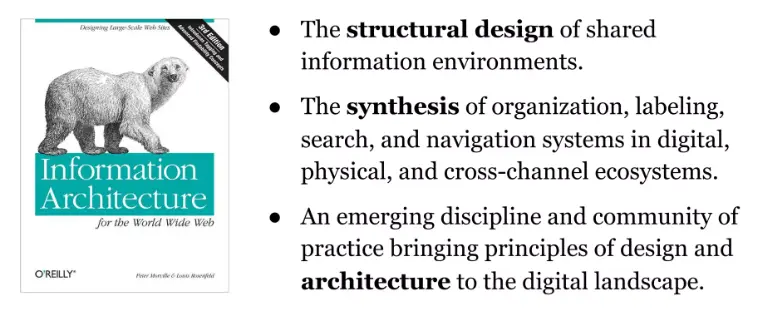
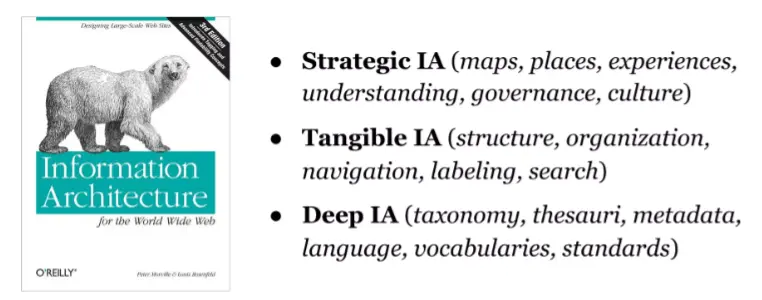
With Lou Rosenfeld, Peter applied principles of library science to solve issues of grouping and labeling on the early web. They co-authored Information Architecture for the World Wide Web, known as the “Polar Bear book,” the seminal book on information architecture. The two dubbed their work “information architecture,” although they did not mean it in the sense of Richard Saul Wurman’s use of the term, who according to Morville, “focused on the presentation and layout of information on a two-dimensional page. We focused on the structure and organization of sites.”
Here are definitions for five of Peter’s specialties:
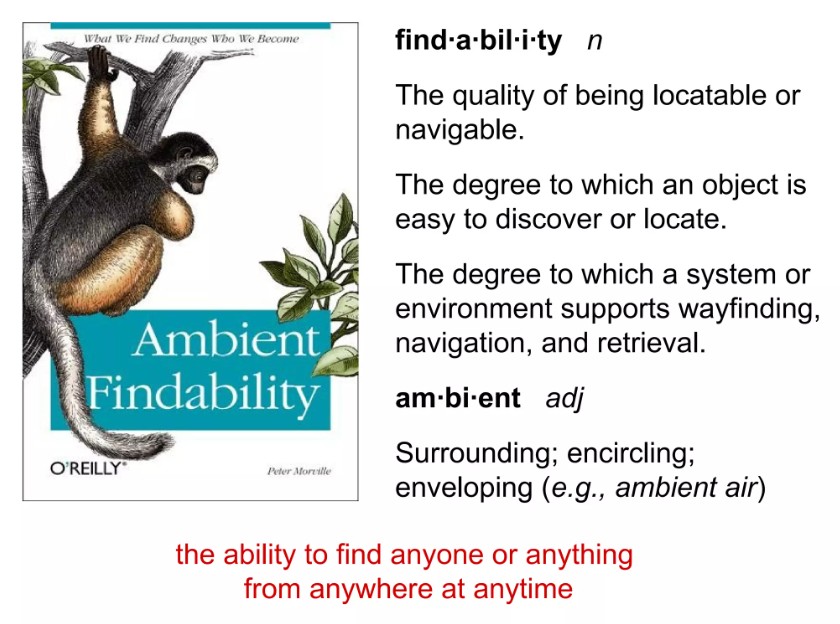
- Findability: The ease with which information can be found, meaning that users can easily find content or information they assume is present on a website.
- Information Architecture (IA): Organizing, structuring, and labeling content in an effective and sustainable way to help users find information and complete tasks. IA helps users understand where they are, what they’ve found, what’s around, and what to expect.
- Systems Thinking: A holistic approach to analysis that focuses on the way that a system’s constituent parts interrelate and how systems work over time and within the context of larger systems.
- Usability: Making products and systems easier to use, and matching them more closely to user needs and requirements.
- User Experience (UX): A person’s perceptions and responses that result from the use or anticipated use of a product, system or service.
Peter created the following content. I have curated it to represent his contributions to the field.
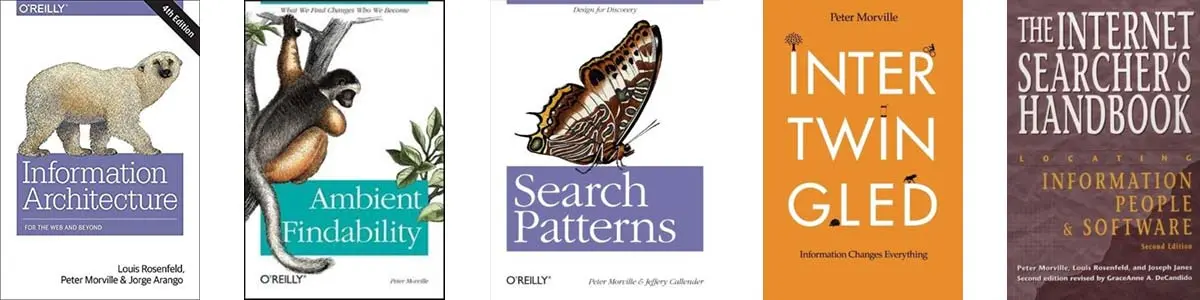
Books by Peter Morville
Findability
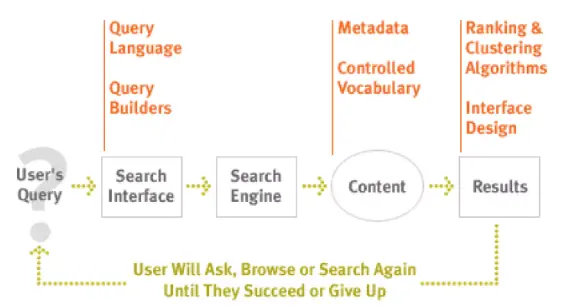
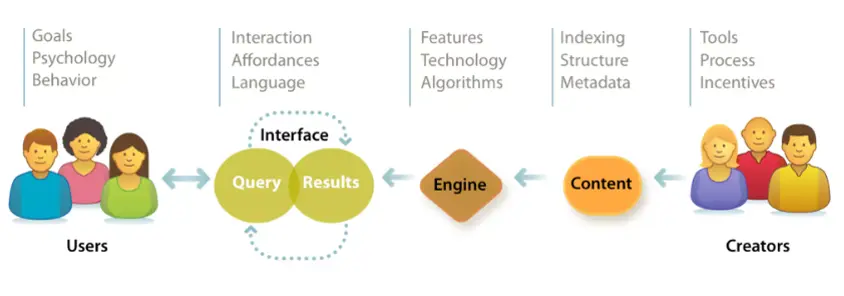
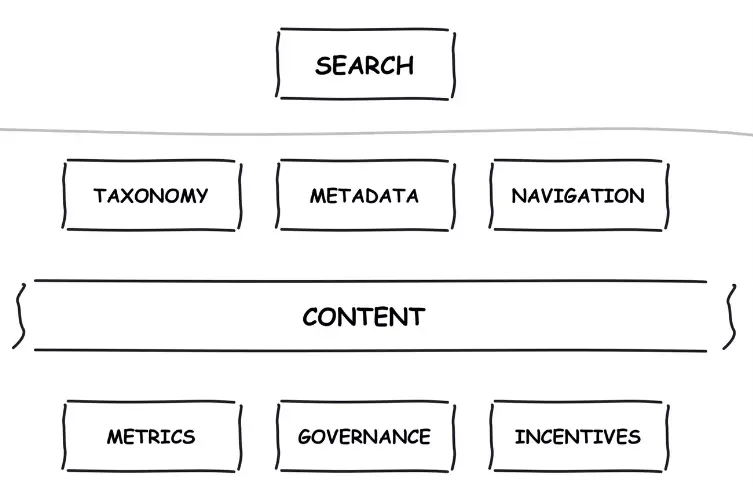
The crossroads of Information Architecture and Knowledge Management
User Experience Honeycomb
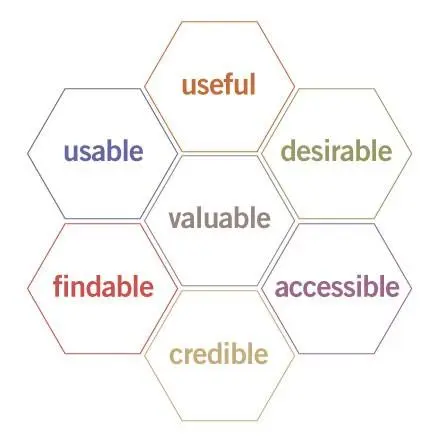
- Useful: We must have the courage and creativity to ask whether our products and systems are useful, and to apply our knowledge of craft + medium to define innovative solutions that are more useful.
- Usable: Usability is necessary but not sufficient.
- Desirable: Our quest for efficiency must be tempered by an appreciation for the power and value of image, identity, brand, and other elements of emotional design.
- Findable: We must strive to design navigable web sites and locatable objects, so users can find what they need.
- Accessible: Our sites should be accessible to people with disabilities (more than 10% of the population).
- Credible: Understand the design elements that influence whether users trust and believe what we tell them.
- Valuable: Our sites must deliver value to our sponsors.
Searching for KM software that enables you to curate, manage, and share organizational intelligence in a single venue? Get in touch to learn about Presto!
Stan Garfield
Please enjoy Stan’s blog posts offering advice and insights drawn from many years as a KM practitioner. You may also want to download a free copy of his book, Profiles in Knowledge: 120 Thought Leaders in Knowledge Management from Lucidea Press, and its precursor, Lucidea’s Lens: Special Librarians & Information Specialists; The Five Cs of KM. Learn about Lucidea’s Presto, SydneyDigital, and GeniePlus software with unrivaled KM capabilities that enable successful knowledge curation and sharing.
**Disclaimer: Any in-line promotional text does not imply Lucidea product endorsement by the author of this post.
Never miss another post. Subscribe today!
Similar Posts

The KM Mentor, Part 9: Knowledge Management Certification
KM expert analysis and recommendations for knowledge management training and professional development that help build skills in a variety of specialties under the KM rubric.

The KM Mentor, Part 8: Top Knowledge Management Trends 2026
The intersection of AI and KM allows knowledge managers to inject the best KM into high-priority organizational AI initiatives; Stan Garfield’s review of 8 Top KM Trends 2026.

The KM Mentor, Part 7: What Can a Knowledge Manager Accomplish Without a Budget?
No budget for KM? Stan Garfield shows how 20 KM components and the Five Cs let you demonstrate value using only time and effort, and build the case for investment.

The KM Mentor, Part 6: The 10 Biggest Mistakes New Knowledge Managers Make
KM expert Stan Garfield offers his analysis of the 10 strategic mistakes it’s easy to make as a new knowledge manager, with practical options to proactively prevent them.
Leave a Comment
Comments are reviewed and must adhere to our comments policy.
0 Comments