
Lucidea’s Lens: Knowledge Management Thought Leaders Part 98 – Rachad Najjar

Stan Garfield
 Rachad Najjar is CEO and Founder of 3R Knowledge Services, a consulting firm that provides products and services in the field of organizational learning and expertise-based knowledge management. He specializes in generative AI, knowledge exchange, knowledge management, artificial intelligence, and organizational learning.
Rachad was the former organizational learning leader at GE Vernova. He also led the global knowledge-sharing program there, establishing strategies for knowledge sharing, transferring, reusing, and applying expertise to solve technical engineering problems. He used artificial intelligence techniques to design the knowledge architecture, develop and implement retention of critical knowledge strategies, and map the expertise of each knowledge-sharing community.
Here are definitions for five of Rachad’s specialties:
- Artificial intelligence (AI): The capacity of a computer to perform operations analogous to learning and decision making in humans, as by an expert system.
- Collaboration: interacting with peers and colleagues to exchange ideas, share experiences, work together on projects, and solve problems.
- Generative AI (GenAI): Artificial intelligence capable of generating text, images, synthetic data, or other media, using generative models. Generative AI models learn the patterns and structure of their input training data and then generate new data that has similar characteristics. In the ongoing AI boom, advances in transformer-based deep neural networks have enabled a number of generative AI systems notable for accepting natural language prompts as input. These include large language model (LLM) chatbots and text-to-image artificial intelligence art systems.
- Innovation: The process by which an idea is translated into a good or service for which people will pay.
- Organizational Learning: The capacity of the organization to acquire the knowledge necessary to survive and compete in its environment.
Rachad created the following content. I have curated it to represent his contributions to the field.
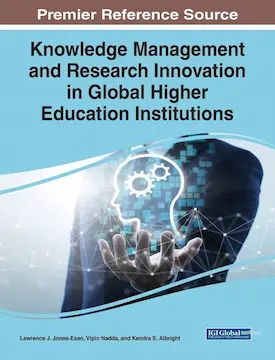
Book Chapter by Rachad Najjar
- Preface with Larry Jones-Esan
- Chapter 3: Maximize Knowledge Sharing and Learning Opportunities
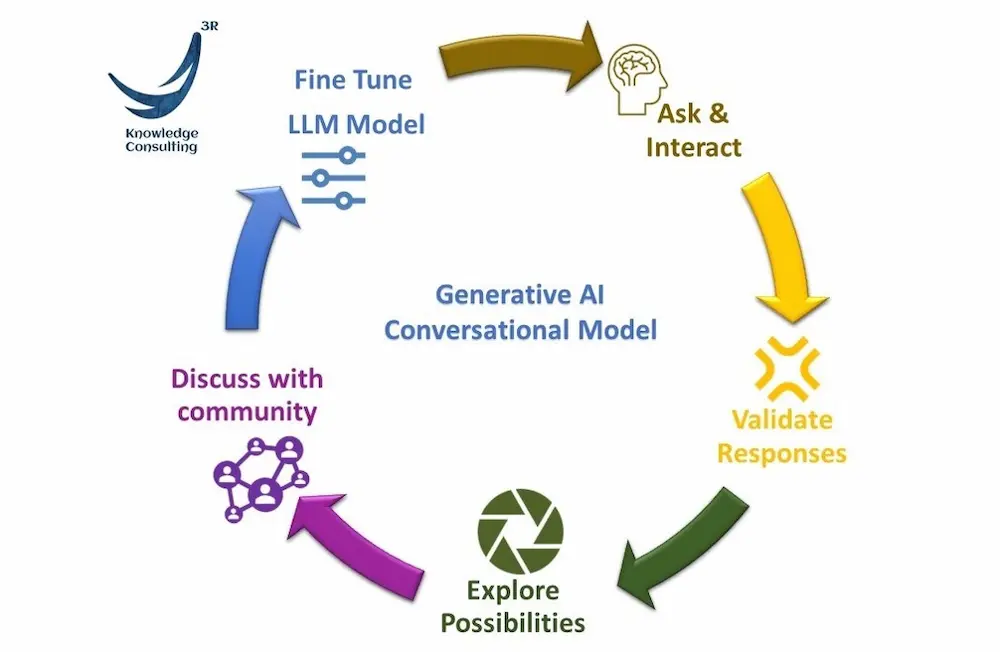
3R Model for Generative AI Conversational Applications
Interactive AI Use Cases
- Enhanced Customer Interaction
- Personalized Learning
- Healthcare Assistance
- Collaborative Decision-Making
- Content Creation and Curation
- Human-Machine Collaboration in Design
- Financial Advisory
- Language Translation and Understanding
- Virtual Reality (VR) and Augmented Reality (AR) Experiences
- Innovative Gaming Experiences
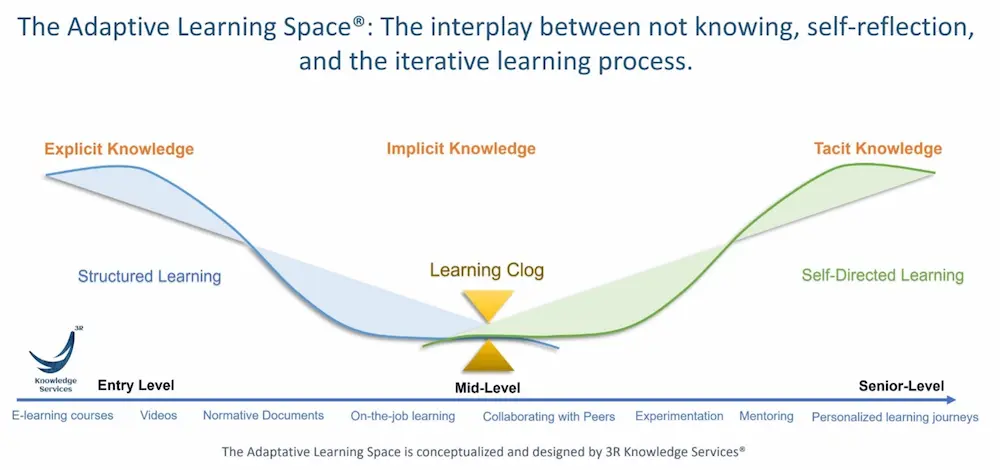
The Adaptive Learning Space
Searching for KM software that enables you to curate, manage, and share organizational intelligence in a single venue? Get in touch to learn about Presto!
Stan Garfield
Dive into Stan’s blog posts for advice and insights drawn from his many years as a KM practitioner. You can also download a free copy of his book, Profiles in Knowledge: 120 Thought Leaders in Knowledge Management from Lucidea Press, and its precursor, Lucidea’s Lens: Special Librarians & Information Specialists; The Five Cs of KM. Learn about Lucidea’s Presto, SydneyDigital, and GeniePlus software with unrivaled KM capabilities that enable successful knowledge curation and sharing.
**Disclaimer: Any in-line promotional text does not imply Lucidea product endorsement by the author of this post.
Never miss another post. Subscribe today!
Similar Posts

The KM Mentor, Part 9: Knowledge Management Certification
KM expert analysis and recommendations for knowledge management training and professional development that help build skills in a variety of specialties under the KM rubric.

The KM Mentor, Part 8: Top Knowledge Management Trends 2026
The intersection of AI and KM allows knowledge managers to inject the best KM into high-priority organizational AI initiatives; Stan Garfield’s review of 8 Top KM Trends 2026.

The KM Mentor, Part 7: What Can a Knowledge Manager Accomplish Without a Budget?
No budget for KM? Stan Garfield shows how 20 KM components and the Five Cs let you demonstrate value using only time and effort, and build the case for investment.

The KM Mentor, Part 6: The 10 Biggest Mistakes New Knowledge Managers Make
KM expert Stan Garfield offers his analysis of the 10 strategic mistakes it’s easy to make as a new knowledge manager, with practical options to proactively prevent them.
Leave a Comment
Comments are reviewed and must adhere to our comments policy.
0 Comments