
Interview with Lesley Farmer about SLA’s Information Outlook

Lauren Hays
I interviewed several members of the editorial board of Information Outlook, a publication of the Special Libraries Association.
The second interview I had with a member of the editorial board of Information Outlook was with Lesley Farmer.
1. Please introduce yourself to our readers.
I am Lesley Farmer. Here is my mini-bio:
Professor at California State University (CSU) Long Beach, coordinates the Teacher Librarianship program, and was named as the university’s Outstanding Professor. She also manages the CSU ICT Literacy Project. She earned her M.S. in Library Science at the University of North Carolina Chapel Hill, and received her doctorate in Adult Education from Temple University. A frequent presenter and writer for the profession, she is a Fulbright scholar and has garnered several honors: including from the American Library Association, the International Association of School Librarianship Commendation Award, the Catholic Library Association, the Online Learning Consortium, CUE and the California Library Association. Dr. Farmer’s research interests include digital citizenship, information and media literacy, and data analytics. Her most current books are Fake News in Context (2021, Routledge) and Reference and Information Sources and Services for Children and Young Adults (2022, Rowman & Littlefield).
2. What is Information Outlook?
This is SLA’s membership-wide journal that has existed for 115 years.
3. Why did you join the editorial board of Information Outlook?
I have been active in SLA since about 2000, and presently coordinate the Academic and Education community webinar series. I have edited several other professional journals in the past, so I thought that serving in this capacity for SLA was appropriate – and interesting for me.
4. How does Information Outlook fulfill a need in the special librarian community?
As this is the single membership-wide journal, it provides a consistent message to all its membership – and others interested in special libraries. It is the best venue for SLA leaders, communities, and individual SLA members to share their expertise via a peer-review journal that publishes timely information quarterly. The journal editorial board also reaches out to experts outside of SLA who have expertise that would benefit the membership.
5. As a member of the editorial board, what is your vision for the future of Information Outlook?
I hope that it will gain more prestige and a loyal following, within not only the organization but the larger information profession as well.
6. What topics do you hope to highlight in forthcoming issues?
We will feature civic engagement, technology, and other topics that emerge in the field: who can predict the future? Possible topics might include data-driven decision-making, DEI, AI, partnerships, media, instruction and training, professional scholarship, OERs, assessment….
7. Are you seeking submissions or regular contributors?
Yes. We are hoping to have some regular columns such as a member highlight and a community highlight. I am serving as the book review editor.
Lauren Hays
Please join us for a free webinar, Generative AI: Considerations for Special Librarians, July 10, 2024 at 11 a.m. Pacific, 2 p.m. Eastern. (Can’t make it? Register anyway and we will send you a link to the recording and slides afterwards). Register now .
**Disclaimer: Any in-line promotional text does not imply Lucidea product endorsement by the author of this post.
Never miss another post. Subscribe today!
Similar Posts

Month 2 as a New Special Librarian: Assessing and Prioritizing
Any new job can be overwhelming as you begin establishing productive professional relationships. Tips from a library expert on how to move from listening and learning to assessing and prioritizing.

Beginning a New Job as a Special Librarian: Tips for Your First 30 Days
Your first 30 days as a special librarian in a new job should include researching the organization, meeting people, and learning terminology, acronyms, workflows, and specific subject areas.
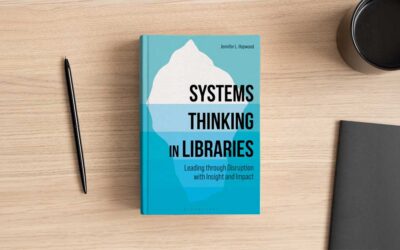
Interview with the Author: Dr. Jennifer Hopwood on Systems Thinking in Libraries
Systems thinking is about learning to understand a problem before rushing to solve it. It offers tools for identifying patterns, relationships, assumptions, feedback loops, and underlying structures.

Maintaining Our Professional Identity as Librarians in an Evolving Field
The term “librarian” no longer captures all we do. Lauren Hays on job titles, professional identity, and staying visible as the information field keeps evolving.
Leave a Comment
Comments are reviewed and must adhere to our comments policy.
0 Comments