
Teaching Evidence-Based Practice for Medical Librarians: An Interview with Joseph Burt

Lauren Hays
Medical librarians play an important, often underrecognized role in clinical care. From helping practitioners develop better clinical questions to teaching workshops on information literacy, they are essential partners in evidence-based practice (EBP).
I recently had the chance to interview Joseph Burt, Librarian at the Erie Pennsylvania VA Medical Center and editor of the forthcoming book The Medical Librarian’s Manual for Teaching Evidence-Based Practice. The book includes a great deal of useful information for medical librarians.
In our conversation, Joseph shares why medical librarians are uniquely positioned to teach EBP, how creative strategies like escape rooms and journal clubs can bring EBP instruction to life, and why now is the time for librarians to lean into their teaching and advocacy roles.
Read on for the full interview.
Please introduce yourself to our readers.
I am Joseph Burt and I hold a degree in Library Science from Indiana University and the Evidence-based Practice Certification from the Joanna Briggs School of Nursing at The Ohio State University. I was the first VA librarian to receive this certification and I am currently the Librarian at the Erie Pennsylvania VA Medical Center. I am also the editor and a contributor to The Medical Librarian’s Manual for Teaching Evidence-Based Practice.
Briefly summarize The Medical Librarian’s Manual for Teaching Evidence-Based Practice.
The book is meant to be a toolbox from which librarians can draw effective, teachable methods of Evidence-based Practice inquiry as a librarian and as an instructor of methods, whether in a hospital or in an academic field. The book also covers aspects of Evidence-based Practice that are important for librarians, such as championing the cause of Evidence-based Practice in clinical use and the importance of diversity and inclusion when searching for articles.
Why did you decide to write a book on this topic?
As a member of my local VA’s EBP council I have continually seen the impact that a well-phrased question and a thorough literature search can bring to patients in a hospital.
Some may not realize that medical librarians teach. How do you see the role of teaching influencing the work of medical librarians?
Librarians are information experts, and our methods are teachable and repeatable. While many people have begun to say that librarians are a dying breed, forward thinkers acknowledge that it is a time to pivot our interests and take a more proactive role in the library and bringing in patrons for classes. The book gives input for drawing the attention of teachers and students to the library for expert training in searching, evaluating, and disseminating information. Librarians will always be necessary if they are willing to put themselves out there as multi-layered professionals in their institutions.
What’s the importance of evidence-based practice in clinical settings? Why is it especially important for librarians?
Evidence-based practice is essential in clinical practice primarily because the research evidence could mean the difference between life and death. To practice as clinicians always have is to ignore the research and evaluations of those in the field. Many clinicians have great experience in the field—however, they must recognize that they are not isolated, and neither are their patients.
What are two unique teaching strategies you want to highlight for teaching evidence-based practice?
The first unique teaching strategy is gamification. Virtual escape rooms are used to teach the principles of question development, searching, and article evaluation. These skills can be taught in the classroom or conference room setting, but those same skills can be reinforced in a game that makes the methods and principles memorable.
The second unique teaching strategy is the use of collaboration in journal clubs. Journal clubs offer clinicians the opportunity to share their findings and questions with a greater composite group than working in pairs or small teams. A single journal can be evaluated from numerous perspectives and a consensus of the relevance of the article to the question can be discussed and disseminated.
Is there anything else you would like to share?
This book is a collaboration of some the most creative minds in Medical Library Science. There are chapters entirely devoted to real life implementation of EBP skills and methods of education. Those who are working consistently in this field of library science have lent their voices to a manual to assist medical librarians and special librarians from other disciplines
Need a stellar ILS/LMS used daily by special librarians and information specialists all around the world? Get in touch to learn about SydneyDigital!
Lauren Hays
Librarian Dr. Lauren Hays is an Assistant Professor of Instructional Technology at the University of Central Missouri, and a frequent presenter and interviewer on topics related to libraries and librarianship. Please read Lauren’s other posts relevant to special librarians. Learn about Lucidea’s powerful integrated library systems, SydneyDigital and GeniePlus.
**Disclaimer: Any in-line promotional text does not imply Lucidea product endorsement by the author of this post.
Never miss another post. Subscribe today!
Similar Posts

Month 2 as a New Special Librarian: Assessing and Prioritizing
Any new job can be overwhelming as you begin establishing productive professional relationships. Tips from a library expert on how to move from listening and learning to assessing and prioritizing.

Beginning a New Job as a Special Librarian: Tips for Your First 30 Days
Your first 30 days as a special librarian in a new job should include researching the organization, meeting people, and learning terminology, acronyms, workflows, and specific subject areas.
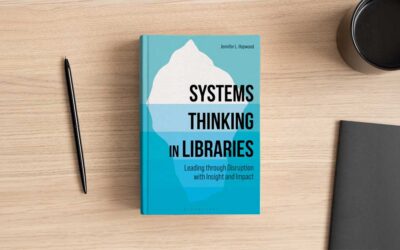
Interview with the Author: Dr. Jennifer Hopwood on Systems Thinking in Libraries
Systems thinking is about learning to understand a problem before rushing to solve it. It offers tools for identifying patterns, relationships, assumptions, feedback loops, and underlying structures.

Maintaining Our Professional Identity as Librarians in an Evolving Field
The term “librarian” no longer captures all we do. Lauren Hays on job titles, professional identity, and staying visible as the information field keeps evolving.
Leave a Comment
Comments are reviewed and must adhere to our comments policy.
0 Comments