
Career Inspiration from Lorene Kennard, Host of The Librarian Linkover Podcast

Lauren Hays
Lorene Kennard began her career in special libraries and has since explored a wide range of roles, gaining invaluable experience along the way. She is also the host of The Librarian Linkover podcast (on which I had the pleasure of being a guest earlier this year), where she talks to librarians who work outside of traditional “librarian” roles.
Recently, the tables turned, and I had the opportunity to interview Lorene. I hope you enjoy learning about her work and how she champions the value and diverse skills of all librarians.
1. Please introduce yourself to our readers.
I am Lorene Kennard. I am the Information Services Manager at the Rockford (IL) Public Library. I also host and produce The Librarian Linkover podcast.
2. Describe your background in special libraries.
My first job after library school at the University of South Carolina was in the corporate library at Morningstar, Inc. in Chicago. I was the first librarian with a master’s degree at the company. I worked for the head of corporate communications, who kind of waved her hands at the room of stuff that was the library space and said, “make it a library,” so I did.
While I was recreating the physical space, I built a research business. I was lucky to have a manager in my first professional job who understood the value of libraries. She was personally supportive of what I was doing, and I was very happy to work in a place that was supportive of my library. People would come in and say, “Are you the new librarian? Do you have your master’s degree?” Then, they would ask me to find them something. E.g., “I’m going on TV in 45 minutes. Can you find me this piece of information?” was a common request.
Building a special library was the most fun. As I got to know more people and what they were doing, I would purchase relevant books to build the book collection. The books were in alpha order by title. I didn’t want to make a drastic change right away! I took some time to create a subject listing. Then, after a year, I pulled each book off the shelf and sorted them into subjects. I weeded each subject. Then, I made spine labels using “Lorene’s cataloging.” Then, I reshelved the books in the new subject order. I sent out a company-wide email telling everyone about the change and I included a list of the subjects. I enjoyed my beautiful shelves as people came to the space to see what books were in their subjects.
Morningstar went public while I was working there. I volunteered to work at the first shareholder meeting. I served on some internal committees. It really was a great group of people, many of whom I keep in touch with today. I loved the corporate environment. Special libraries are incredibly valuable within that culture.
3. How would you describe the influence of the Special Libraries Association (SLA) on your career?
I like to say that I grew up in SLA. I joined SLA as soon as I started at Morningstar. I would not have my library career without SLA, particularly SLA Illinois and the Solo division. After a couple of years in my job, I started going to local chapter meetings. Then, I started volunteering as the vendor committee chair. After I served one term on the board, I was asked to serve as president of the chapter. I learned so much about managing and leading. I learned delegation skills and meeting planning. I like to joke that SLA got a lot out of me—meaning A LOT. But I got a lot more out of SLA. And it’s still going! I was on the editorial board when we brought back the Information Outlook publication and I am currently on the finance committee.
4. In your experience with different library jobs, what knowledge and skills are most transferable?
I truly believe that all of our skills can transfer into other industries. I ask my podcast guests what “traditional” library skills they use and almost everyone says the reference interview. If you can figure out what people are really asking for, that is a skill that most people do not have. That skill is addressed in our library school education. Being able to find information efficiently and organize information are also incredibly valuable in every industry. We can’t overemphasize the importance of customer service. Is there any other place we can go and consistently get a high level customer service experience? There aren’t many places like that; our people skills are incredibly valuable.
5. Based on your experience, what knowledge and skills do you believe will be most valuable for librarians moving forward?
Self-promotion. Acknowledging that we have all these skills is essential or we cannot move forward. Librarians often downplay our abilities or our value. Nevertheless, if we do not value ourselves, nobody will. Our skills are incredibly important and useful and if we do not talk about them, no one else will.
6. You have a podcast; what can you share about that?
On The Librarian Linkover podcast, I talk to librarians who do not work in libraries to demonstrate that we have the skills to work in any industry. I just scheduled episode 116 and 117. There are many librarians not working in libraries. We are everywhere!! I’ve interviewed CEOs, a college president, a project manager, a poet, state librarians, a data analyst, a customer success manager, a prospect researcher, a DEI consultant, freelance researchers, a video game designer, a lavender farmer—the list goes on and on. My podcast is in no way negative toward official librarians and libraries. It is all about our skills. Why should becoming Director be the end of our career path? There are so many places we can take our library degrees and experiences. I have heard from listeners who tell me that my podcast helped them get a job outside libraries. Or it helped them reframe their skills to move up in their current library.
7. Why did you decide to start a podcast, and what are your goals for it?
There are a few reasons. I was not super engaged by my job at the time and I was starting to job hunt. I was looking outside libraries, but I couldn’t get any traction. Having worked as a public library director should imply a skill set, but it didn’t. Hiring managers were not getting it. Therefore, I started thinking about how no one is advocating for our skills. If you want something done, you have to do it yourself! Plus, I hadn’t learned anything in a while. So, I thought why not learn how to do a podcast.
My goal is to change the paradigm for how our skills are viewed. I would love to get my podcast in front of HR people and hiring managers, but that is extremely difficult to do on a wide scale. I know how to get in front of librarians. I think librarians are my main listeners, but I am not entirely sure. Receiving so much feedback about how much my podcast has helped people means I’m doing something right. I am looking at plans to expand my reach so stay tuned!
8. Is there anything else you would like to share?
I would like to see librarians come back to professional associations. As budgets have gotten tighter, especially in special libraries, librarians have dropped their memberships and stopped participating. As social media got more popular, people were using that as their professional network. I was a huge fan of Library Twitter for a long time, but it is not a professional network. I think we have gotten away from appreciating the value of our professional associations. We need a place where we have professional standards and education. We need community now more than ever.
Thank you for having me!
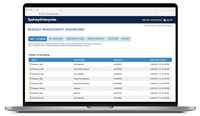
Our stellar ILS/LMS is used daily by special librarians, researchers, and information specialists around the world. Get in touch to learn about SydneyDigital!
Lauren Hays
Librarian Dr. Lauren Hays is an Assistant Professor of Instructional Technology at the University of Central Missouri, and a frequent presenter and interviewer on topics related to libraries and librarianship. Please read Lauren’s other posts relevant to special librarians. Learn about Lucidea’s powerful integrated library systems, SydneyDigital and GeniePlus.
**Disclaimer: Any in-line promotional text does not imply Lucidea product endorsement by the author of this post.
Never miss another post. Subscribe today!
Similar Posts

Strategies for New Special Librarians: Gathering Data and Planning Work
Becoming embedded in an organization new to you includes documenting what you learn, helping build a culture of feedback, acting upon that feedback, and developing process improvements.

Month 2 as a New Special Librarian: Assessing and Prioritizing
Any new job can be overwhelming as you begin establishing productive professional relationships. Tips from a library expert on how to move from listening and learning to assessing and prioritizing.

Beginning a New Job as a Special Librarian: Tips for Your First 30 Days
Your first 30 days as a special librarian in a new job should include researching the organization, meeting people, and learning terminology, acronyms, workflows, and specific subject areas.
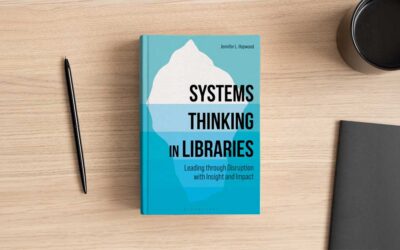
Interview with the Author: Dr. Jennifer Hopwood on Systems Thinking in Libraries
Systems thinking is about learning to understand a problem before rushing to solve it. It offers tools for identifying patterns, relationships, assumptions, feedback loops, and underlying structures.
Leave a Comment
Comments are reviewed and must adhere to our comments policy.
0 Comments