
Library Instruction: Learning Styles Are Out, Evidence-Based Practices Are In

Lauren Hays
I recently watched a series of Google videos on how college students can use Gemini in their academic work. In one, the presenter suggested that students could use Gemini to learn in their preferred “learning style” (paraphrased). I couldn’t help but shake my head—despite substantial evidence debunking the concept, the myth of learning styles continues to persist in educational conversations (see references below).
Whether or not you are familiar with the research on learning styles, you may be wondering why I am raising the issue. The reason is simple: incorporating teaching strategies unsupported by evidence can be harmful to learners. Research shows this can indeed be the case (see Nancekivell et al., 2020).
If you create instructional materials, lead workshops, or interact directly with learners in any capacity, it is important to understand that designing around learning styles is not a sound practice. Instead, instructional approaches should be grounded in research-based strategies that are more likely to improve learning.
Evidence-Based Alternatives to Learning Styles
I have previously written about the concept of desirable difficulties and the practices of retrieval practice, interleaving, and spacing. These are scientifically sound strategies that can be used in teaching and learning. If you are looking for other evidence-based practices, I encourage you to pick up one of the recommended resources listed below.
Another good approach to use in place of learning styles is Universal Design for Learning (UDL), developed by CAST. This is an excellent resource when you want to give learners a choice in how they demonstrate their learning. UDL is also grounded in research.
Reflecting on Your Approach to Instruction
I encourage you to reflect on your own instruction and consider where you may need to change language or design so that you are not using learning styles but instead, strategies supported by evidence. Ask yourself:
- Where am I still relying on learning-style language?
- What evidence-based substitute could I use instead?
- How will I know that learners actually retained the content?
Rather than sorting learners into styles, design for variability: clear goals, multiple ways to practice, frequent low-stakes retrieval, and spaced review. This is how we can support learners.
Additionally, my hope is that we keep questioning the “common wisdom” we have inherited and ask whether it is supported by strong research. By doing so, we not only improve our own teaching and therefore the experience of our learners, but we also model the kind of critical thinking we want learners to adopt.
Please review the references and resources below.
References
Cuevas, J. (2015). Is learning styles-based instruction effective? A comprehensive analysis of recent research on learning styles. Theory and Research in Education, 13(3), 308-333.
Nancekivell, S. E., Shah, P., & Gelman, S. A. (2020). Maybe they’re born with it, or maybe it’s experience: Toward a deeper understanding of the learning style myth. Journal of Educational Psychology, 112(2), 221–235.
Pashler, H., McDaniel, M., Rohrer, D., & Bjork, R. (2008). Learning styles: Concepts and evidence. Psychological Science in the Public Interest, 9(3), 105-119.
Riener, C., & Willingham, D. (2010). The myth of learning styles. Change: The Magazine of Higher Learning, 42(5), 32-35.
Rohrer, D., & Pashler, H. (2012). Learning styles: Where’s the evidence?. Online Submission, 46(7), 634-635.
Recommended Resources
Bjork, E. & Bjork, R. (2009). Making Things Hard on Yourself, But in a Good Way: Creating Desirable Difficulties to Enhance Learning. (Chapter 5). Psychology and the Real World.
Brown, P. C., Roediger III, H. L., & McDaniel, M. A. (2014). Make it stick: The science of successful learning. Harvard University Press.
Persellin, D. C., & Daniels, M. B. (2015). A concise guide to improving student learning: Six evidence-based principles and how to apply them. Stylus Publishing, LLC.
Tobin, T. J., & Behling, K. T. (2018). Reach everyone, teach everyone: Universal design for learning in higher education. West Virginia University Press.
Our stellar ILS/LMS used daily by special librarians, researchers, and information specialists now offers AI search! Get in touch to learn about SydneyDigital.
Lauren Hays
Librarian Dr. Lauren Hays is an Associate Professor of Instructional Technology at the University of Central Missouri, and a frequent presenter and interviewer on topics related to libraries and librarianship. Please read Lauren’s other posts relevant to special librarians. Learn about Lucidea’s powerful integrated library system, SydneyDigital.
**Disclaimer: Any in-line promotional text does not imply Lucidea product endorsement by the author of this post.
Never miss another post. Subscribe today!
Similar Posts

Month 2 as a New Special Librarian: Assessing and Prioritizing
Any new job can be overwhelming as you begin establishing productive professional relationships. Tips from a library expert on how to move from listening and learning to assessing and prioritizing.

Beginning a New Job as a Special Librarian: Tips for Your First 30 Days
Your first 30 days as a special librarian in a new job should include researching the organization, meeting people, and learning terminology, acronyms, workflows, and specific subject areas.
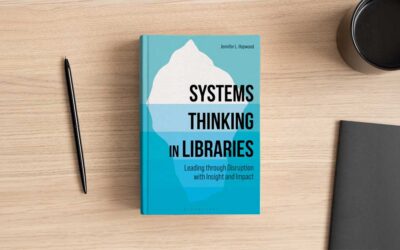
Interview with the Author: Dr. Jennifer Hopwood on Systems Thinking in Libraries
Systems thinking is about learning to understand a problem before rushing to solve it. It offers tools for identifying patterns, relationships, assumptions, feedback loops, and underlying structures.

Maintaining Our Professional Identity as Librarians in an Evolving Field
The term “librarian” no longer captures all we do. Lauren Hays on job titles, professional identity, and staying visible as the information field keeps evolving.
Leave a Comment
Comments are reviewed and must adhere to our comments policy.
0 Comments