
Lucidea’s Lens: Knowledge Management Thought Leaders Part 106 – Hubert Saint-Onge

Stan Garfield
 Hubert Saint-Onge is the founder and Principal of SaintOnge Alliance, with expertise in knowledge management, strategy, organization capability and learning, performance enhancement through culture renewal, and leadership development. He developed and refined a model called the Knowledge Assets Framework. This model strategically integrates business plans with branding, leadership, and people management to optimize the performance of an organization.
Hubert specializes in organizational performance, formulation and implementation of knowledge and learning strategies, development of communities of practice, strategic development of organizational capabilities, values alignment, development of leadership teams, leadership assessment and succession planning, assessment of customer-perceived value, and development and implementation of branding strategy. The focus of this work is on strategic planning, organizational change and transformation, collaboration, knowledge sharing, capability building, and leadership development.
Here are definitions for five of Hubert’s specialties:
- Change Management: Developing a planned approach to change in an organization to address anticipated obstacles and to ensure successful adoption.
- Collaboration: Interacting with peers and colleagues to exchange ideas, share experiences, work together on projects, and solve problems.
- Communities: Groups of people who share an interest, a specialty, a role, a concern, a set of problems, or a passion for a specific topic. Community members deepen their understanding by interacting on an ongoing basis, asking and answering questions, sharing their knowledge, reusing good ideas, and solving problems for one another.
- Culture: The way things are done in an organization, and what things are considered to be important and taboo.
- Knowledge Sharing: An activity through which information or expertise is exchanged between people within or between organizations and communities.
Hubert created the following content. I have curated it to represent his contributions to the field.
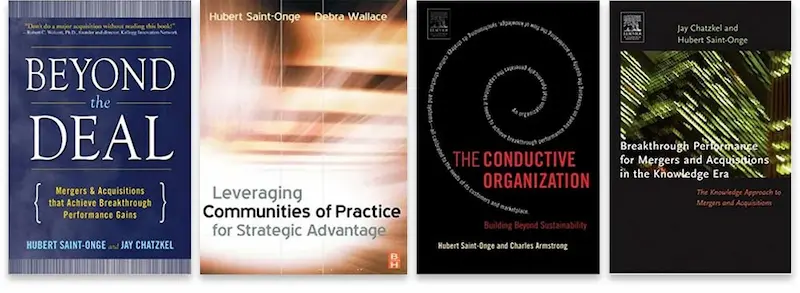
Books by Hubert Saint-Onge
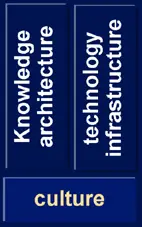
Knowledge Assets Framework
The Knowledge Assets Framework is a comprehensive model for leveraging knowledge for value creation, so that knowledge activities in an organization will have maximum impact. It comprises three pillars: knowledge architecture, technology infrastructure and culture.
An integral part of the Knowledge Assets Framework is the articulation of a Knowledge Strategy. This is best developed through a set of multi-dimensional questions to be addressed by the CKO through dialogue with other members of the organization. The questions cover the areas of intangible asset management, business case development, the role of learning and implementation issues.
Knowledge value creation must become a key theme in an organization before implementation begins. A scale determining the ‘knowledge readiness’ of an organization, or its ‘absorptive capability’ will help to determine what pre-cursors need to be in place prior to implementation.
The Power Of Shared Knowledge
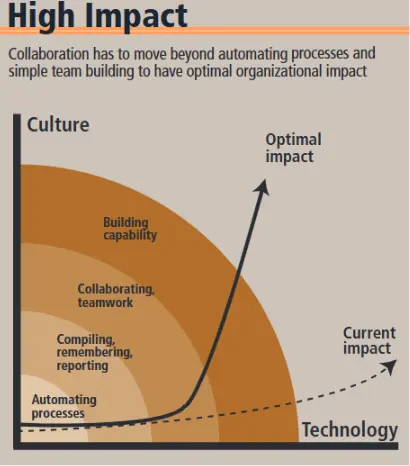
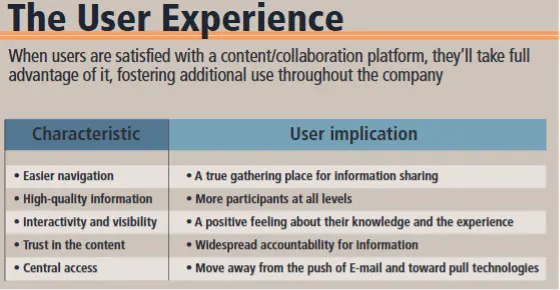
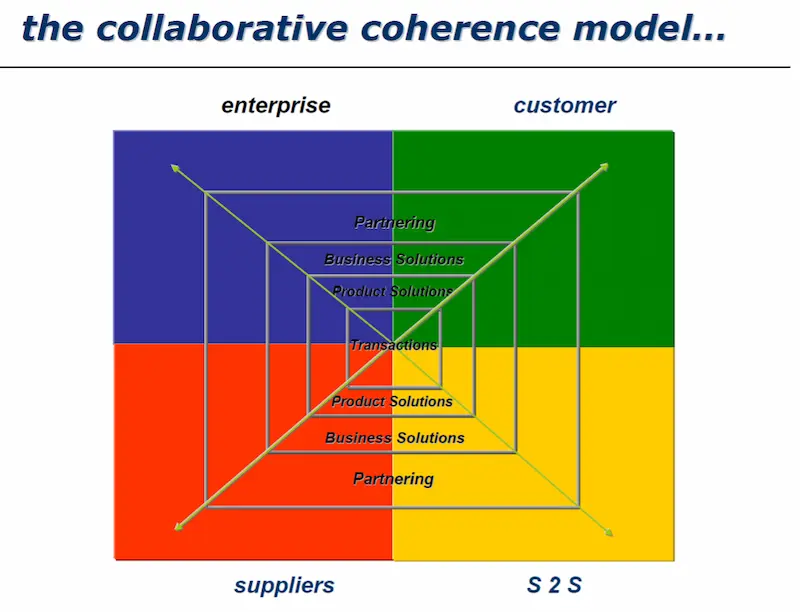
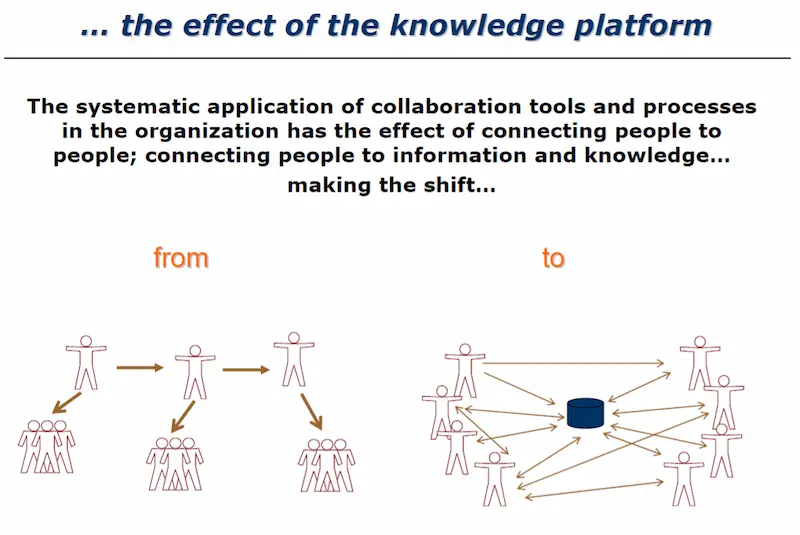
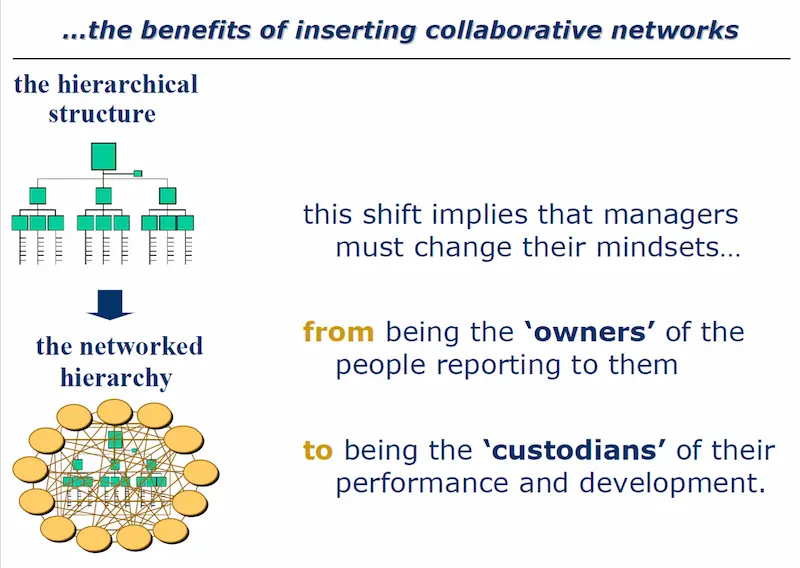
Collaborative Networks and the New Enterprise
Stan Garfield
Dive into Stan’s blog posts for advice and insights drawn from his many years as a KM practitioner. You can also download a free copy of his book, Profiles in Knowledge: 120 Thought Leaders in Knowledge Management from Lucidea Press, and its precursor, Lucidea’s Lens: Special Librarians & Information Specialists; The Five Cs of KM. Learn about Lucidea’s Presto, SydneyDigital, and GeniePlus software with unrivaled KM capabilities that enable successful knowledge curation and sharing.
**Disclaimer: Any in-line promotional text does not imply Lucidea product endorsement by the author of this post.
Searching for KM software that enables you to curate, manage, and share organizational intelligence in a single venue? Get in touch to learn about Presto!
Never miss another post. Subscribe today!
Similar Posts

The LEXICON Framework Part 3: 10 Ways to eXplain the Value of Knowledge Management
KM expert Stan Garfield offers 10 practical ways to explain and prove the value of knowledge management using Clare Bilobrk’s LEXICON framework.

The LEXICON Framework Part 2: Empower Champions of KM
In part two of our LEXICON series, we explore how empowering KM champions can strengthen knowledge management adoption. Discover practical strategies to identify champions, define their roles, and connect them across your organization.

The LEXICON Framework Part 1: Link KM to Daily Workflows
Stan Garfield explores the LEXICON framework for KM, sharing 16 strategies to embed knowledge management into daily workflows effectively.

Lucidea’s Lens: Knowledge Management Thought Leaders
Part 128 – Jay Chatzkel
Learn about the impact of Jay Chatzkel, a KM leader who helped shaped practices in collaboration, process management, and organizational transformation.
Leave a Comment
Comments are reviewed and must adhere to our comments policy.
0 Comments