


How Online Access Creates New Opportunities: Lessons from a Canadian Art Gallery
Maclaren Art Centre’s Portal Goals
- Expand access to the collection through a public portal
- Create more opportunities for audience engagement
- Support new revenue-generating initiatives
- Strengthen collaboration with other cultural institutions
Curatorial Assistant
MCLAREN ART CENTRE
When the curatorial team at the MacLaren Art Centre implemented Argus as their new collections management system, one of their top priorities was making the collection more accessible to the public. With the launch of a new public portal in August 2025, that goal is already translating into stronger relationships with visitors, researchers, and peer institutions, better ways to support local students, and new revenue streams.
For Yasmeen Kazak, Curatorial Assistant at MacLaren, the portal is about more than putting records online or simply expanding the gallery’s online presence. It’s about opening up the collection to better support learning, connection, and new opportunities for the organization.
Since its launch, the portal has drawn interest from students, researchers, and other museums, galleries, and cultural organizations. It has also set the stage for Yasmeen and her team to move forward with long-awaited programs and other upcoming initiatives.
“It’s been able to serve as a base for us working on other things that are collection-related,” Yasmeen says. “It’s facilitating us to continue our work with the collection, bringing it into the current century, and making it accessible to people, which is our big goal.”
A Public Collection Should Be Publicly Accessible
“As an organization, we’re a public gallery,” says Yasmeen. “We have a duty to make our collection accessible.”
That perspective has helped shape the project from the start. While Argus had already given MacLaren a stronger foundation for managing its collection, the public portal made it possible to extend access beyond staff and open more of the collection to the wider community.
As Yasmeen put it, museums and galleries hold collections in public trust. “It doesn’t belong to you, it belongs to the public,” she said. “Therefore, it should be accessible to the public.”
Launching the Portal with Structure and Support
Launching a public portal was a major project, but MacLaren approached it in a structured and manageable way.
Yasmeen led the work internally with support from a Lucidea Client Services Specialist and assistance from a summer student. Together, they worked through a checklist that clarified what needed to be done, how long each step would take, and how to prepare for launch.
“It was very structured and organized,” Yasmeen said. “I knew exactly what was required at each step, so I was never caught off guard as the project progressed.”
One of the biggest decisions was determining which fields should be visible to the public. From there, the team focused on shaping the look and feel of the portal and tailoring it to MacLaren’s needs.
“It was really nice that we could customize everything,” Yasmeen said. “It was basically endlessly tailorable.”
The Client Services Specialist’s past experience working with similar institutions also helped guide the process, giving Yasmeen a useful reference point for making informed decisions along the way.
Turning Access Into True Connection
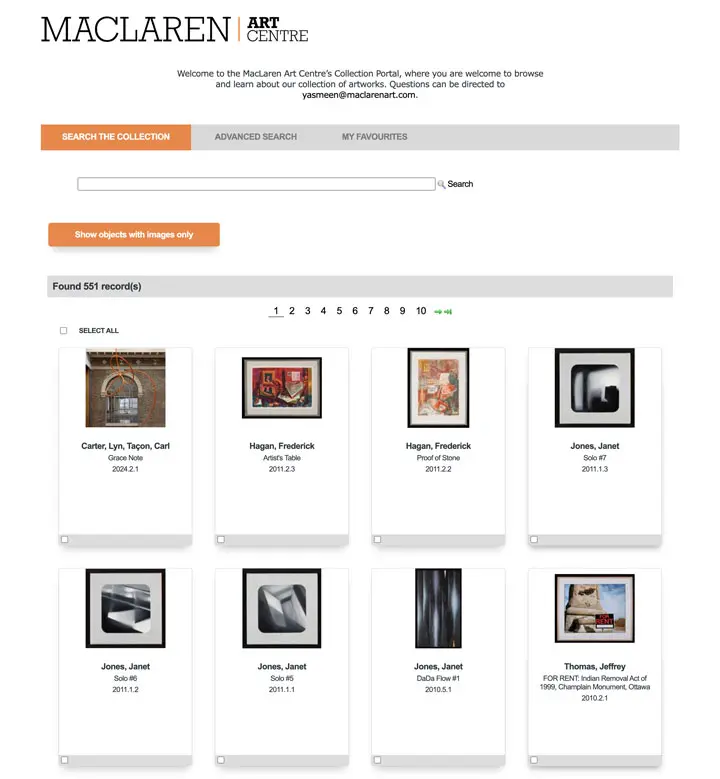
Since its launch, the online portal has quickly become more than a public-facing database. It’s a new channel for people to discover the collection, engage with MacLaren online, and reach out to the team with specific inquiries.
“People are reaching out through the portal directly,” Yasmeen said. “They can message us through the portal, and I receive an email that tells me exactly what record they’re referring to. So I can answer questions pretty quickly just by looking on the back end.”
Because the portal’s inquiry system is tied to specific collection records, it’s easier for MacLaren’s team to respond more quickly and with greater context when questions come in.
MacLaren has also promoted the portal through its newsletter and Art of the Month posts on social media, helping direct more people to the collection and encouraging them to explore it for themselves.
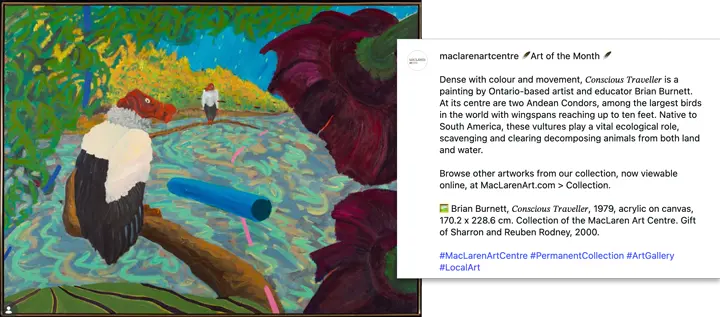
“We primarily post to Instagram since it’s more visual, and then mirror those posts on Facebook and share them in our newsletter as well,” Yasmeen said. “The Art of the Month posts relating to the collection portal bring hundreds of visitors to the portal page on our website. It’s important as another way for people to engage with us online and discover our collections.”
Community members, independent researchers, and artists have all engaged with the portal in different ways. Some have reached out with questions about specific works or artists. Others have simply expressed excitement about being able to view more of the collection online at their own pace.
“We’ve had a lot of really lovely feedback from general community members,” Yasmeen said. “People who are engaged with us think it’s really great to be able to see into the collection.”
For Yasmeen, the response has been surprising–in the best way. After working to make the collection more accessible, it’s been rewarding to see that effort turn into such genuine interest and engagement.
“Sometimes you do things and you wonder, who’s going to care?” Yasmeen said. “It turns out a lot of people cared.”
Supporting the Next Generation of Museum Professionals
MacLaren has an ongoing partnership with Georgian College’s Museum and Gallery Studies program, facilitating an annual exhibition project in which students work with the gallery’s collection. This year’s cohort is the first to use the public portal as part of that experience.
The portal allows students to explore the collection independently, both onsite and from home. They can research objects, identify themes, and begin shaping exhibition ideas without relying entirely on staff to facilitate every step.
“It’s a lot easier for me,” Yasmeen said. “They can do some of the work, looking into the collection on their own.”
By providing students with an easier way to access and search the collection, MacLaren’s portal has created a self-directed process and mutually beneficial experience for the students and gallery alike. Students gain experience working with collections, portals, object research, and interpretation, while MacLaren benefits from their fresh perspective and additional research, content, and context on their subject of choice.
The portal has also made it easier for other researchers to engage with the collection. Artists, descendants, and independent researchers have all used it to find works and ask specific questions, often discovering the collection on their own before reaching out to MacLaren.
For MacLaren, that kind of self-serve access is valuable not only because it broadens engagement, but because it saves time and allows staff to focus more energy where it matters most.
“It cuts the time that I have to facilitate things physically in half,” Yasmeen said.
Increasing Visibility and Enabling Collaboration
The portal has also made MacLaren’s collection more visible to peer institutions. For museums and galleries planning exhibitions, being able to search another institution’s holdings is a major advantage.
“It’s good to have our collection accessible because other institutions can use it to see what we have while they’re in the process of forming exhibitions,” Yasmeen said.
Instead of reaching out to ask whether MacLaren holds works by a particular artist, other institutions can search the portal themselves, identify relevant pieces, and approach the gallery with a fully informed request.
That visibility is already bearing fruit. Yasmeen shared that a regional gallery viewed works through the portal, reached out about specific pieces, and initiated a loan process from there. That kind of visibility is crucial to strengthening relationships in a sector where collaboration matters.
“Our community is very relationship-dependent,” Yasmeen said. “So, the portal helps in that way, too.”
MacLaren is also considering expanding outreach to galleries across Canada to promote the portal further and increase awareness of the works they have available for loan. Perhaps this will inspire other galleries to do the same with their own collections management systems.
Opening Doors to New Revenue Opportunities
For Yasmeen and her colleagues at MacLaren, the increased visibility of the collection not only supports community access and relationships, but it also opens the door to vital new revenue sources.
Institutional loans can generate revenue, but one of the most promising developments is the gallery’s plan to revive its Art Rental and Sales program. The original program, which serves individuals and businesses, slowed during the pandemic. Now, the portal is helping create the foundation needed to bring it back.
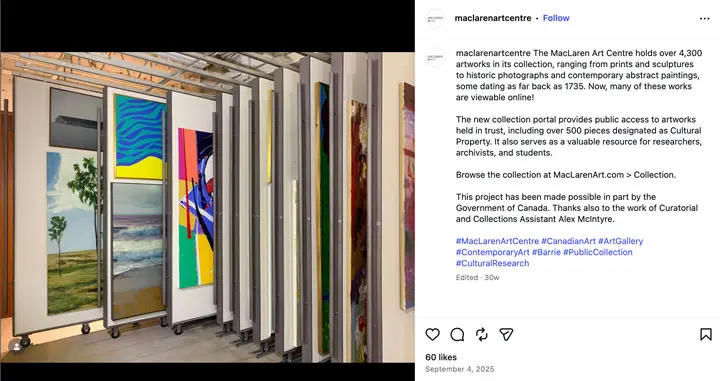
With thousands of works in the collection, the portal acts as a catalog that allows potential patrons to browse what is available and narrow down their options before contacting staff. For a small team working at capacity, that makes a huge difference.
“We’re at maximum capacity with our workload,” Yasmeen said. “So anything we can do with such a high return like that is really, really helpful.”
As a charity, MacLaren sees that kind of revenue support as especially meaningful. It helps the organization generate additional income through a manageable revenue stream while continuing to invest in serving the community.
Streamlining Collections Management Work with Argus
Although the portal is public-facing, it is also improving work behind the scenes by connecting engagement and discovery directly to collections management workflows.
When MacLaren recently facilitated a loan through the portal, the team was able to document that process directly in Argus, updating the object record and adding an activity record tied to the loan. That allowed the gallery to streamline the interaction and keep the loan history connected to the collection record.
“It’s allowing us to optimize workflows and make everything happen via Argus,” Yasmeen said.
The portal is not separate from collections management. It builds on the value of the CMS by allowing MacLaren to strengthen stewardship, support engagement, and manage collection activity in one platform.
Looking Ahead
With the portal live, the MacLaren team is looking ahead to more opportunities to strengthen relationships and make the online experience even richer.
One priority is adding more photographs to the portal, so it becomes more visual and even more useful for the public, students, researchers, and potential art rental clients.
Yasmeen also sees the portal as a major milestone that is helping the gallery move forward on other collection-related initiatives.
“It’s allowed us to address a significant priority and keep moving forward with improving the collection,” she said. “If we didn’t have that, we’d be stuck in a lot of ways.”
MacLaren’s portal has quickly become more than a digital access point. It is helping the gallery connect people with the collection in new ways while supporting the next phase of its work. We’re excited to see what they do next!