


How Argus Helped the BC Sports Hall of Fame Manage a High-Stakes Collection Move
BC Sports Hall of Fame Goals
- Make informed decisions in real time
- Track thousands of individual items and boxes
- Accommodate virtual visitors even while the Hall is closed
- Optimize a smaller space
Curator
BC SPORTS HALL OF FAME
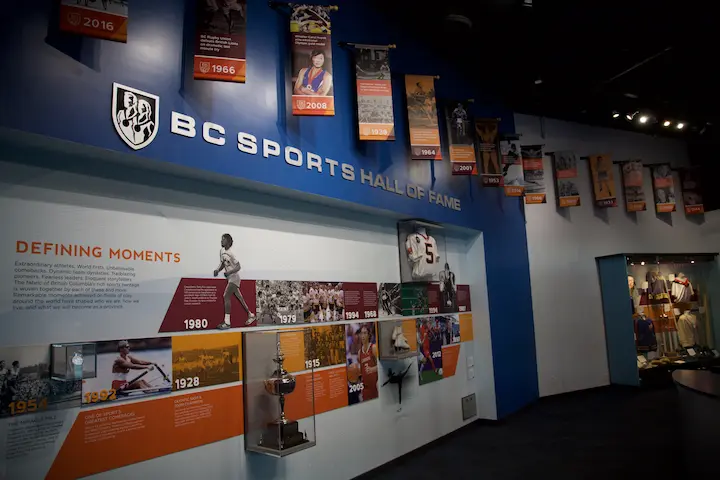
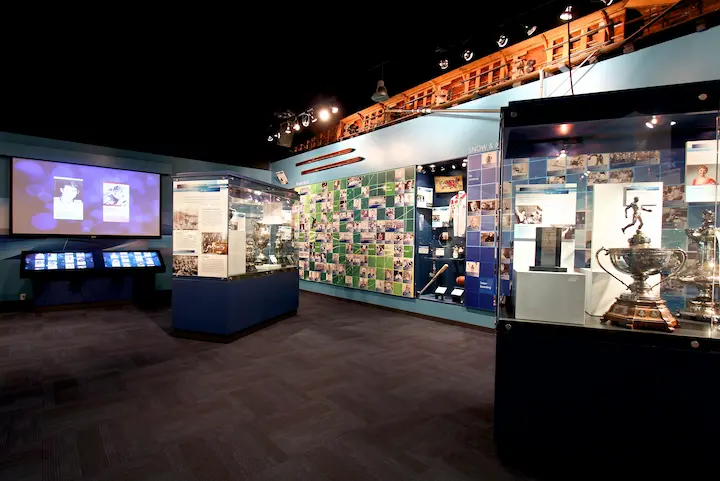
As home to over 150 years of sporting history and memorabilia, including around 30,000 artifacts and hundreds of thousands of archival materials, it’s no wonder the BC Sports Hall of Fame is a popular destination for sports fans from around the world.
For curator Jason Beck and his team, the scale of the collection is a point of pride, but it also made a recent project especially daunting: relocating the entire collection during a prolonged and increasingly complex transition at BC Place.
What began as a large-scale but straightforward move became a two-phase process stretching across two years. Construction delays, shifting timelines, temporary storage spaces, and a permanent space that was smaller than anticipated forced the team to adapt constantly.
Through it all, they relied on Argus CMS to help them stay organized, track object locations, and make informed decisions in the best interest of the collection.
This latest chapter builds on an earlier success story about the Hall’s Argus implementation, showing how the CMS continued to support the organization through a major operational challenge.
A Complex Move on a Massive Scale
The scope of the relocation was significant from the start.
“The artifact collection is around 30,000 items right now, and our artifact and archival collection is hundreds of thousands of written documents, photos, AV materials, scrapbooks, frame prints, and paintings,” Jason said. “So, it’s massive.”
During the first phase of the move, the team had just weeks to relocate the collection into a temporary space. That meant tracking thousands of individual items as well as nearly 2,000 boxes.
“That’s where Argus came in. We could really keep track of locations, box numbers, and that sort of thing. By the end of it, we had nearly 2,000 boxes that were accounted for.”
The move would have been possible without Argus, Jason noted, but much more difficult.
“I think we could have done this move without Argus, but it would have been a lot tougher,” he said. “It allowed us to keep things much more consistent.”

Collaboration Was Crucial During a Stressful Transition
As the relocation progressed, Argus became central to the team’s day-to-day operations. With three to four staff members updating records at once on computers, tablets, and phones, Argus’ web-based platform allowed them to manage location changes in real time without slowing one another down.
“Multiple staff could be checking items at the same time,” Jason said. “I can be making an update in one corner of the room. Kristen from my team can be making an update in another corner of the room. Emma’s making an update in the other corner of the room, and we’re not tripping over one another.”
The ability to work simultaneously was vital because the team wasn’t just moving materials from one location to another. They were also adjusting to the realities of a new storage space that didn’t always match their expectations.
“We couldn’t always rely on the length of a wall that we were told was 20 feet when it was actually 19 feet, 9 inches. We couldn’t rely on those sorts of things or timelines, but we could rely on Argus.”
How Argus Helped the Team Optimize a Smaller Space
One of the most practical (and unexpected) ways Argus supported the move was by helping the team design and adjust shelving units on the fly. Using the object dimensions and location data in the CMS, the team was able to make more informed decisions about shelving height, layout, and space optimization.
“While building these shelving units, we were trying to anticipate what goes on specific shelves,” Jason said.
“We could consult Argus and see, for example, that the material is some bags that are quite flat. So we could lower that unit or shelf down, and keep it as small as possible, to then create some extra space above. So it was a massive help in order to figure out how to build these shelving units on the fly.”
When the team tried building one shelving unit without referring to Argus, they quickly ran into problems.
“We tried doing one without Argus, and we started unpacking items, and right away, things weren’t fitting. We were wasting space,” Jason said. “Then we realized we all pretty much had to disassemble and start again.”
Once they began using Argus shelf by shelf, they were able to work far more efficiently. In at least one case, that meant avoiding the need to build an additional shelving unit altogether.
“Using Argus, we were able to condense things down so efficiently that we actually gained space,” Jason said.
Avoiding Costly “Tomorrow Problems”
For Jason, one of the biggest advantages of Argus during the move was that it helped the team solve problems properly in the moment, rather than resorting to temporary fixes that they would need to revisit later.
“Without Argus, there’d be a lot of what we’ve been calling ‘tomorrow problems,’” he said. “There still are some of those, but Argus helped us avoid the trap of finding short-term solutions for things like how to organize items, build shelves, and prioritize space—problems we otherwise would have had to solve later on.”
Instead, Argus helped the team make better decisions while the relevant items, space constraints, and context were still directly in front of them.
“Argus allows us to do it right away in a lot of cases,” Jason said. “That’s great.”
Giving Fans Access Even During Closure
Although the Hall will be closed for part of the summer due to World Cup-related activity at BC Place, the collection itself will not be out of reach.
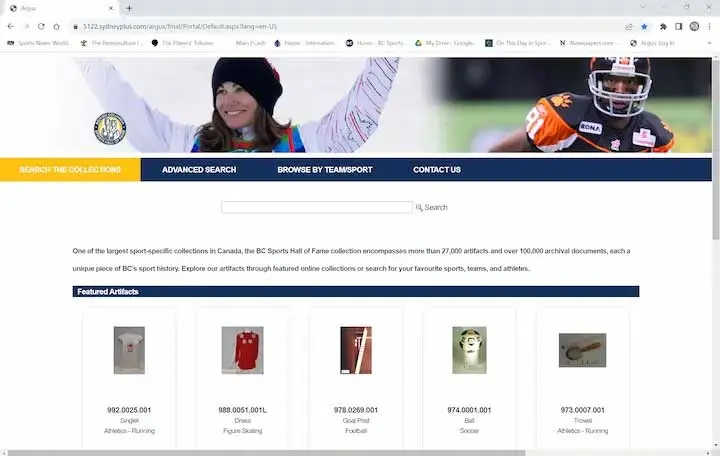
Thanks to the public portal, visitors and researchers can still explore the collection online while the Hall is closed. This continued access is an important silver lining during a period of physical disruption, and a reflection of the work Jason and his team have put into building and organizing collection records with Argus.
Their efforts support not only internal collections management but also public discovery, helping the Hall remain connected to its audience.
A Stronger Foundation for What Comes Next
As the move nears completion, Jason expects the benefits of Argus to continue to be felt in the Hall’s everyday collections work when it reopens for normal operations later this summer. With accurate location data and reliable, up-to-date collections information, his team will be able to retrieve items faster and work more efficiently in the new space.
Argus has been central to the BC Sports Hall of Fame’s collections operations since long before the relocation began. What this experience revealed, however, is just how crucial a strong foundation can be during periods of uncertainty.
Preparation Leads to Better Outcomes
When asked what advice he’d give to another institution facing a similar disruption—whether that’s a move, temporary closure, or renovation—Jason emphasized the importance of preparation.
“Make sure you have an organized collection going in,” he said. “And make sure your team is well versed in whatever CMS you’re using going into a move.”
Jason and his team had already implemented Argus and were comfortable using it. When the relocation became more complex than expected, Argus proved even more valuable than Jason had anticipated, helping the team maintain control, make informed decisions in real time, and emerge from a difficult transition on stronger operational footing.