


Traditional museum catalogs are written from a position of institutional authority. While curated expertise is vital, it can inadvertently position the public as passive consumers of history and culture rather than active participants in it.
To cultivate deep, modern patronage, forward-thinking institutions are disrupting this one-way dynamic. By using their Collections Management Systems (CMS) and public portals to facilitate public crowdsourcing, museums are inviting their audiences to help build the database itself.
When you allow the public to tag photos, transcribe historical diaries, or identify local figures, you are doing more than outsourcing data entry. You are driving patronage—the investment of time, influence, and financial aid—by fostering a profound sense of shared intellectual ownership.
Want to go deeper into this topic? Please join us for Rachael Cristine Woody’s upcoming new webinar, How to Attract Patronage with the Museum CMS, on Wednesday, August 26, 2026 at 11 a.m. Pacific, 2 p.m. Eastern. Register now to reserve your spot!
Turning Screen Time into Deep Emotional Stewardship
When a community member contributes their knowledge to a museum database, a psychological shift occurs. They stop looking at a collection as the museum’s assets and start viewing it as our shared heritage.
The Smithsonian Transcription Center is a prime example of this dynamic in action. The institution utilizes its massive digital catalog to invite volunteers—whom they explicitly dub “volunpeers”—to transcribe field notes, diaries, and historic logbooks that are otherwise unsearchable.
This active participation creates an emotional bond. A digital volunteer who spends three hours transcribing a Civil War soldier’s letter develops a deep, personal stake in that specific object and the institution preserving it. This intellectual investment acts as a direct pipeline for recruiting physical docents, archive assistants, and brand advocates who use their personal influence to champion the museum online and offline.
Breaking Down Barriers to Drive Micro-Memberships
Crowdsourcing democratizes the museum experience, lowering the barrier to entry for individuals who might feel alienated by traditional, top-down academic framing. By introducing citizen science, community oral histories, or public tagging initiatives, you give every visitor a clear, actionable way to contribute.
This approach beautifully addresses the semantic gap—the difference between how a curator catalogs an object and how a regular person searches for it. By embedding public tagging tools into the online CMS portal, a local resident can look at a 1920s photo database and tag neighborhood landmarks, vintage car models, or family ancestors.
The benefit of bridging this gap includes:
- Immediate Validation: Patrons see their own contributions instantly enrich the public record.
- Higher Engagement: Users interact with the objects rather than just scrolling past them.
- Increased Conversions: Interactive users are statistically far more likely to convert into paid members or make micro-donations because they have tangibly experienced the value of their involvement.
Attracting Major Participatory and Community Grants
The financial benefits of CMS crowdsourcing extend far beyond individual micro-donations. Today, the world’s most powerful philanthropic entities—including the Mellon Foundation, the Knight Foundation, and federal agencies like the Institute of Museum and Library Services (IMLS)—heavily favor funding projects that prioritize community co-curation and digital equity.
When you write a grant proposal backed by a CMS that supports active community contributions, your metrics become incredibly persuasive. Instead of simply reporting how many people passively viewed a webpage, you can prove that 5,000 citizens actively contributed 20,000 hours of intellectual labor to enrich and connect with the collection. This shift from passive consumption to active community co-authorship turns your database into a magnet for heavy-hitting grants.
Museum Spotlight: History Colorado
Institutions are also finding highly inventive ways to loop their CMS infrastructure into broader community initiatives. History Colorado (HC), for example, engages in deep co-authorship through its Museum of Memory Collections—a public history initiative that works with residents to record oral histories.
To expand this framework for Colorado’s 150th anniversary, they introduced the Portrait of Colorado storytelling initiative. This project goes a step further by offering oral history equipment rentals to the public.
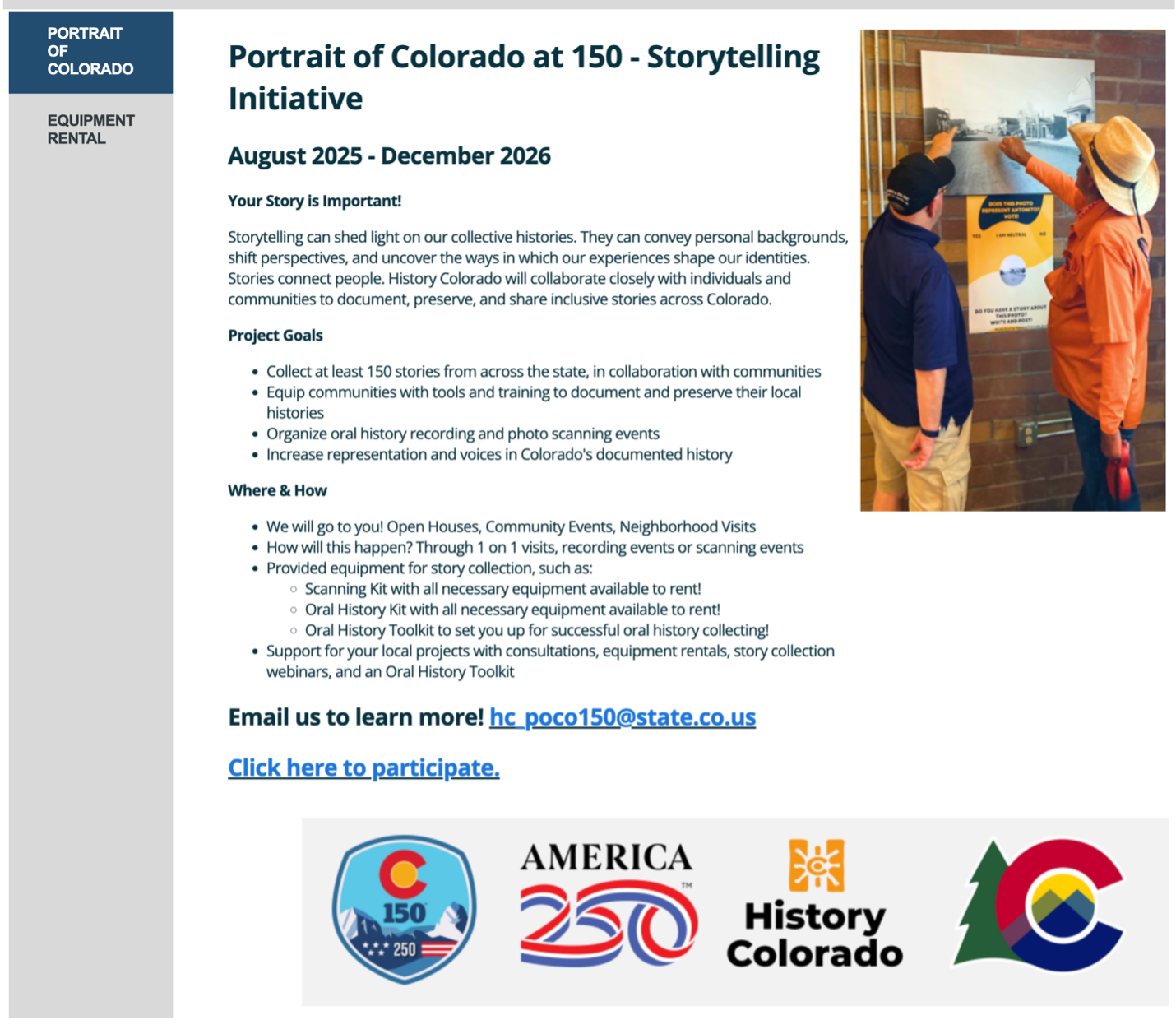
“Portrait of Colorado at 150 – Storytelling Initiative,” History Colorado, accessed July 1, 2026.
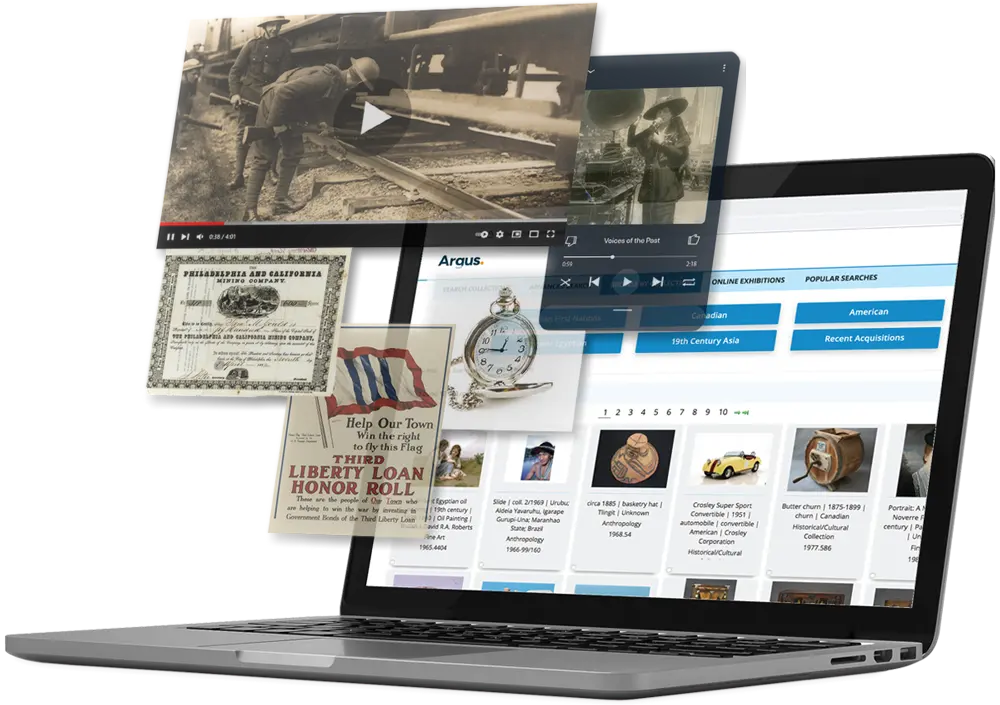
To manage this logistically, HC uses their CMS portal, Argus, to showcase the equipment available for rent directly through object records. This creative application shows how a modern CMS can act as the front-facing infrastructure for community storytelling, streamlining access and empowering citizens to participate in co-authorship by capturing their own histories.
From Static Catalog to Living Collaboration
Co-authorship transforms your CMS from a static collection into a living, breathing community collaboration. By giving your audience the keys to the catalog, you don’t just build a better database—you build a fiercely loyal community of patrons ready to defend, fund, and celebrate your institution for years to come.






0 Comments