


Don’t miss a Halloween photo from our friends at the Denver Art Museum at the end of this post!
It’s an unfortunate reality in museums that when discussing needed collection management tools, the conversations center on a lack of available financial resources. It is the ultimate conversation stopper in institutional planning. When it comes to adopting a new Collections Management System (CMS), financial anxiety is often the very first hurdle that prevents a museum from even looking at what is available on the market. It’s understandable that many of us look at our operating budgets, glance at software price tags, and immediately shut the door.
The Four Roadblocks to Collection Management Modernization
This is the first entry in a four-part series designed to help museum professionals dismantle the roadblocks that keep us stuck using an ill-fitting CMS. Over the next few weeks, we’ll look closely at small team sizes, overwhelming data chaos, and the time it takes to select the right CMS for you. Today, however, we’re tackling the big one: money.
The fear of cost often stems from a misconception that shopping for a CMS requires an immediate cash reserve. In reality, staying on an outdated system carries significant hidden costs, from lost staff productivity to data loss vulnerabilities. To break past the financial paralysis and start exploring your options, the institution needs to shift from a scarcity mindset to one of strategic evaluation.
Window Shopping is Free (and Crucial for Long-Term Planning)
The first step in navigating the financial challenge is understanding that shopping does not equal buying. Exploring the CMS market is entirely free. The only cost to requesting vendor demos, reading software reviews, and speaking with peer institutions is time. Initiating the shopping process helps provide important information your museum needs to create a realistic financial roadmap. You cannot build an accurate budget or advocate for operational funding based on an unspecified, hypothetical piece of software. You need concrete numbers, specific features, and a clear understanding of the pricing structure to make the case to leadership.
The Myth of the Enterprise Price Tag
Furthermore, the CMS market has evolved dramatically over the last decade. The assumption that modern software is inherently unaffordable for small to mid-sized museums is outdated. The rise of cloud-based Software-as-a-Service (SaaS) models means that many vendors now offer off-the-shelf software options, or scalable pricing models based on user count, record volume, and modular features.
Calculating the True Cost of Doing Nothing
To move forward, begin by conducting an internal financial audit of your current setup. Calculate how much time your team spends on tedious or repetitive tasks. For example, fighting to surface information within the CMS for reporting or manually tracking down item information. Translate those hours into labor costs. When you can demonstrate to stakeholders that your current inefficiencies are already draining the museum’s annual operating budget, the cost of a new CMS becomes an appealing solution rather than a luxury.
Separating Launch Costs from Annual Overhead
When you begin shopping, you’ll quickly learn that a CMS budget is divided into two distinct buckets: one-time upfront costs (data migration, training, and initial setup) and ongoing annual costs (hosting, support, and updates). Separating these line items makes fundraising far less daunting. One-time launch costs are highly attractive targets for single-cycle grants, donor matches, or capital campaigns. Meanwhile, the annual subscription can be integrated directly into your routine operating overhead, offset by the administrative hours and IT maintenance costs your new system saves.
Do not let an empty line item in this year’s budget prevent you from planning for the future of the museum’s collection management. Shopping for a CMS is the very action that will help you articulate your financial needs and ultimately unlock the resources to meet them.
A Halloween Thank You to the Denver Art Museum
Rachael’s series is about getting past the roadblocks that keep museums stuck with an ill-fitting CMS, so this photo from the Denver Art Museum was an especially welcome sight. For Halloween, their Registration department dressed up as a friendship bracelet that spells “We ❤ ARGUS.” It’s a nod to the museum’s current DIVA exhibition, which features fashion and objects from stars past and present, including Taylor Swift.
It means a lot to see the registrars we work with show their love for Argus in such a creative way. Thank you to the Registration team for making our week!
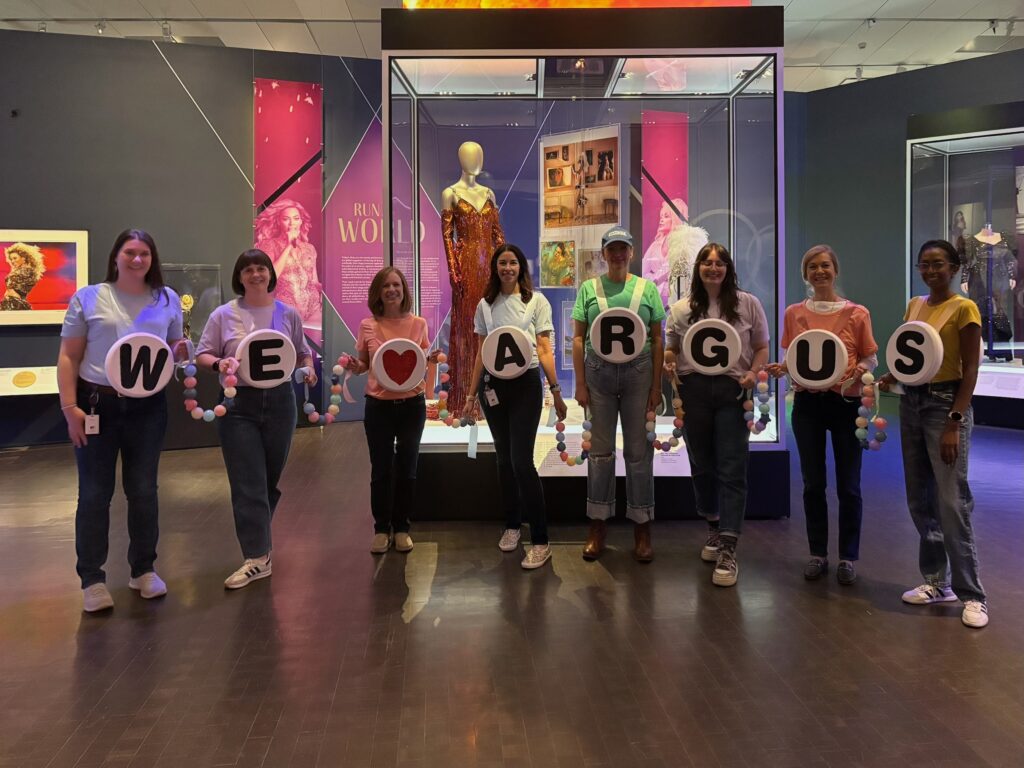
The Denver Art Museum’s Registration team.






0 Comments