
Examples of How Archives Can Be Used to Elevate Museum Collections

Rachael Cristine Woody
Last week, we reviewed how archives can enhance museum collections online. This week, we will continue our work with an examination of specific examples, including what items different types of archives may contain and where to capture this data.
To refresh: Collections typically found within a museum’s archive are the papers of archaeologists, art dealers, artists, previous owners, and researchers. Their collections hold correspondence, site maps, purchase receipts, photographs, and other documentation that can offer additional information regarding the interpretation and understanding of objects in the collection.
Connecting Information from the Archives to the Object
Archival collections can contain information about past purchase prices, previous acquisition sources, details of archaeological sites, how the object may relate to others, previous research, and a sense of the object’s past lives.
The following are examples of collection types, possible information, and how that information may be applied to the object via the Collections Management System (CMS). That’s not to say it’s the only thing to do with the information, it’s just the first stop: capturing the data in a centralized place that can be used for interpretation and engagement ad infinitum.
Examples for How to Connect Information from the Archives to the Object
This section will review the following collection types as examples: archaeologist, artist, and art dealer. We’ll review the type of information typically found within that collection type, and the CMS fields most applicable for capturing this data.
An Archaeologist’s Papers
An archaeologist’s papers can offer significant contextual value for objects removed from the site.
Common items among the papers are:
- Archaeological site maps
- Site photographs
- Photographs of the objects in-situ and when removed
- Notes on where the objects were found
- Notes on what the objects were found with
- Information on the object’s condition when found
- Analysis on the time period of the excavation
- Research notes on the lifestyles of the people at that site
Information from these items can help to fill in the following CMS fields:
- Title
- Date
- Description
- Condition
- Materials
- Cultural Association
- Place
- Related Materials
An Artist’s Papers
An artist’s papers can offer deeper insight into the creation of the object, how it was created, how it evolved during creation, and the intention of the creator.
Common items among an artist’s papers are:
- Notes and gathered research for inspiration
- Photographs of inspiration and of the object in progress
- Notes on the creation of the object
- Details on the materials used
- Information on the object’s condition when completed
- Information on when and where an object was made
Information from these items can help to fill in the following CMS fields:
- Title
- Date
- Description
- Condition
- Materials
An Art Dealer’s Papers
An art dealer’s papers can include rare “behind the scenes” information from an artist, critical provenance information, and a perspective on the larger field of work.
Common items among the papers are:
- Correspondence with the artist and/or past dealers
- Photographs of the object in previous ownership settings
- Information regarding the object featured in past exhibits and publications
- Past selling prices of the object up to current sale by the dealer
- Previous assessment(s) of the object condition and any past conservation work
- Previous research into the object, creator, place of origin, etc.
Information from these items can help to fill in the following CMS fields:
- Title
- Date
- Description
- Condition
- Materials
- Provenance
Conclusion
This concludes our mini-series on how to enhance museum CMS data using “hidden” troves of information. Even if you can’t carve out time for a deep dive into data enhancement right away, identifying and getting to know these pockets of enhancement information is a great first step toward future work.
Additional Reading
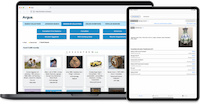
Seeking a flexible, extensible high tech museum CMS purpose-built to fit unique field and permissions requirements? Get in touch to learn more about Argus!
Rachael Cristine Woody
Intrigued by this post? Please join us for the companion webinar, Enhance Museum Collections Online with “Hidden” Troves of Information, TODAY at 11 a.m. Pacific, 2 p.m. Eastern. (Can’t make it? Register anyway and we will send you a link to the recording and slides afterwards). Register now or call 604-278-6717.
**Disclaimer: Any in-line promotional text does not imply Lucidea product endorsement by the author of this post.
Never miss another post. Subscribe today!
Similar Posts

Shared Resilience: Museum and Affinity Group Partnerships
Successful museum-affinity group partnerships are based on turning cultural capital into community capital, offering multiple benefits for the group and the broader community, all thriving within the museum ecosystem.
Culture on Tap: The Power of Commercial-Cultural Partnerships
When cultural heritage aligns intentionally with local business goals, it unlocks a powerful value exchange that transforms heritage into an economic engine, aligning historical narratives with local commerce.
Civic Catalysts: How Museums and Local Governments Build Resilient Communities
Building alliances with local government shifts museums from the margins of community planning directly into the center of civic life. Detailed analysis of how the resulting ecosystem fortifies museum operations.

Joint Ventures in Museopreneurship: 3 Collaborative Models
The future of museum sustainability belongs to institutions that lean into collaboration rather than isolation, through shared art acquisitions, innovative brand franchising, or membership networks, amplifying impact while mitigating risk.
Leave a Comment
Comments are reviewed and must adhere to our comments policy.
0 Comments